Custom Software Development: Benefits, Process & Guide
.png)

.svg)
[ key takeways ]
- Custom software aligns technology directly with how a business operates, not the other way around.
- It is designed to solve specific operational challenges that generic tools often fail to address.
- Businesses gain better control over features, updates, and long-term system direction.
- It supports smoother integration with existing tools and improves overall workflow coordination.
- Although it requires higher initial effort, it often delivers stronger long-term business value.
.svg)
Custom software development is the process of building software designed specifically for your business needs. It focuses on creating solutions that match your workflows, goals, and challenges instead of forcing you to adjust to generic tools.
Understanding how custom software works, and more importantly, when to invest in it, can make a real difference in how efficiently your business operates. It helps you reduce limitations, improve productivity, and build systems that truly support growth.
The right decision at the right time can turn software into a long-term advantage rather than just another expense.
If you are wondering whether custom software is the right choice for your business, keep reading to explore how it works and where it adds real value.
What Is Custom Software Development?
Custom software development is the process of designing, building, and maintaining software customized to a specific business need or organization.
Instead of relying on ready-made tools, companies invest in bespoke software that aligns closely with their exact business requirements. This approach allows them to create a tailored software solution that fits their workflows, goals, and challenges without unnecessary features.
Unlike enterprise software designed for a broad audience, custom solutions are not built for mass use. They do not focus only on general requirements. Instead, they are developed as business-specific applications that address unique problems and support specialized operations.
This makes custom software development more flexible and practical. It adapts to how a business actually works, rather than forcing the business to adjust to the software, which creates a smoother and more efficient experience overall.
Key Characteristics of Custom Software
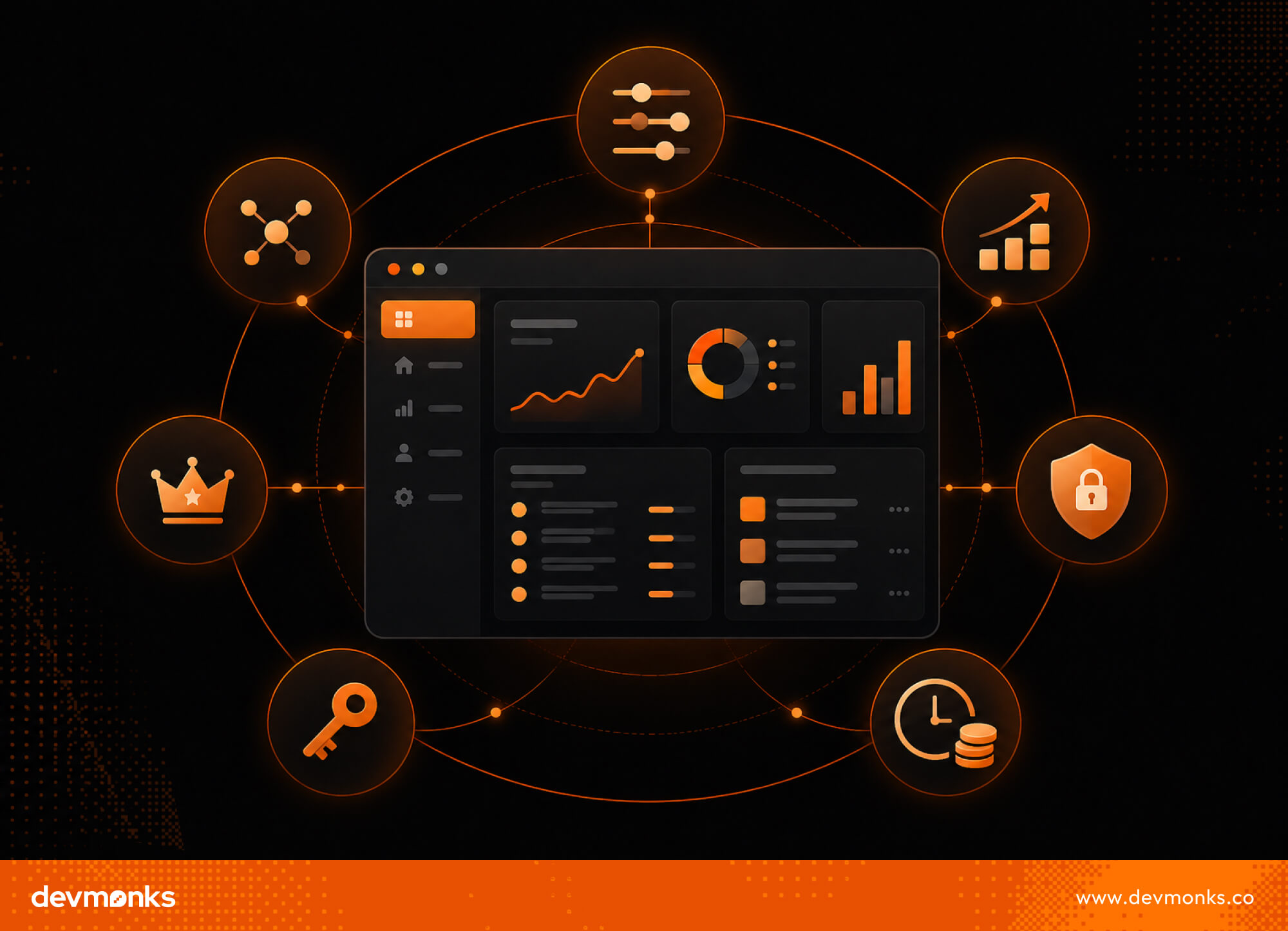
Custom software stands out because it adapts to your business, not the other way around. Here are the key characteristics that make it different.
Built Around Your Needs
Every feature is designed as a user-specific feature, which focuses only on what your business actually requires. This ensures no unnecessary tools or functions slow down your operations.
Designed to Grow With You
A scalable architecture allows the software to handle more users, data, and operations as your business expands. You can scale without needing to replace the entire system later.
Smooth System Connectivity
Strong system integration ensures the software works easily with your existing tools and platforms. This reduces manual work and keeps your data consistent across systems.
Full Ownership and Control
You control updates, features, and data, without depending on third-party limitations or restrictions. This gives you the freedom to adapt the software whenever your needs change.
Stronger Security Measures
Customized systems offer better protection since security is designed specifically for your operations. It reduces common vulnerabilities often found in widely used software.
Creates a Competitive Edge
Unique features help your business stand out and operate more efficiently than competitors. It allows you to deliver experiences that generic solutions cannot match.
Requires Time and Investment
Custom solutions take longer to build and usually involve a higher initial cost and development time. However, the long-term value often outweighs the upfront investment.
Choosing the right custom software development company ensures your project is built with the right skills, process, and long-term vision.
Companies like Dev Monk can be considered for their focused approach to building practical, business-driven digital solutions.
How Custom Software Development Works
Building custom software follows a structured process to turn ideas into working solutions. This process is known as the Software Development Lifecycle (SDLC).
Key Phases of the Custom Development Process are described below.
Requirement Analysis
This stage focuses on understanding what the business actually needs before development begins.
Teams perform requirement gathering and business analysis to define clear goals and features. They work closely with stakeholders to avoid confusion and reduce costly changes later.
Software Design & Architecture
Here, the system structure and overall experience start taking shape before coding begins. Developers plan system architecture, database design, and UI/UX design to ensure smooth performance.
This step creates a clear blueprint that guides the entire development process.
Development & Testing
This is where the actual product is built and refined through continuous improvements.
Developers use software engineering practices to write code and build core features. At the same time, quality assurance ensures the software works correctly and remains bug-free.
Deployment & Maintenance
Once ready, the software is launched and made available for real users. Using CI/CD and cloud deployment, teams release updates quickly and efficiently.
Ongoing software maintenance keeps the system secure, updated, and aligned with business needs.
Custom Software vs Off-the-Shelf Software

Custom software is built for a specific business, while off-the-shelf tools are made for general use.
In contrast, ready-made solutions like SaaS or commercial software serve a wide audience with standard features.
On the contrary, custom solutions focus on unique needs, while enterprise software often balances both scale and flexibility.
Advantages of Custom Software over Off-the-Shelf Software
- Scalability: Custom solutions use scalable architecture, while off-the-shelf tools may limit growth as usage increases.
- Competitive Advantage: Custom software offers unique features, whereas commercial software provides similar tools to competitors.
- Automation: Custom systems automate specific workflows, while generic tools only support common processes.
- Maintenance & Support: Custom software offers dedicated support, whereas SaaS platforms provide shared, less personalized assistance.
Limitations of Custom Software over Off-the-Shelf Software
- Development Cost: Custom software requires a higher upfront investment, while off-the-shelf tools are usually subscription-based and cheaper initially.
- Implementation Time: Custom solutions take longer to build, whereas ready-made software can be used almost immediately.
When Off-the-Shelf Software Is Better
Off-the-shelf software works best when business needs are simple and do not require customization.
For example, SaaS tools like CRM systems or accounting software are often enough for standard operations. In such cases, businesses benefit from quick setup, lower cost, and minimal technical involvement.
Benefits of Custom Software Development for Businesses
Custom software helps businesses move faster, work smarter, and stay ahead in a competitive market. Here are the major benefits of custom software development for your business.
Improved Business Efficiency
Custom software streamlines workflows and removes repetitive manual tasks. It automates processes, reduces errors, and helps teams focus on more valuable work.
Over time, this leads to faster operations and smoother coordination across departments.
Competitive Advantage
It allows businesses to build unique features that competitors cannot easily copy. This creates a stronger market position and a more distinctive customer experience.
You can offer something different instead of relying on the same tools as everyone else.
Customized Functionality
Every feature is built specifically for your business needs and processes. You do not have to adjust your operations to fit the software. This makes daily tasks easier because the system works exactly the way your team expects.
System Integration
Custom solutions connect easily with existing CRM, ERP, or other proprietary systems. This creates a smooth flow of data across all business functions. As a result, teams spend less time switching between tools and more time getting work done.
Ownership and Control
The company owns the software, including its code and features. This gives full control over updates, changes, and future development. You are not dependent on third-party providers for critical business decisions.
Better Security and Compliance
Security features are designed based on your specific risks and industry requirements. It becomes easier to meet regulations and protect sensitive business data. This is especially important for industries that handle financial or personal information.
Cost Efficiency Over Time
Although initial costs are higher, custom software reduces long-term expenses. It eliminates subscription fees and improves productivity over time.
The return on investment becomes clear as the system continues to support business growth.
Common Types of Custom Software
Custom software is developed in different forms depending on business needs and how users interact with the system.
The most common categories include enterprise applications, web applications, and mobile applications. These are explained below.
Enterprise Software
Enterprise software supports large organizations by managing complex operations across multiple departments. For example, ERP systems like SAP S/4HANA, Oracle NetSuite, and Microsoft Dynamics 365.
Supply chain systems such as IBM Sterling or custom logistics platforms also fall into this category. These tools help businesses control finance, HR, inventory, and operations in one integrated system.
Web Applications
Web applications run in browsers and are widely used for accessible, scalable business solutions.
For example, custom dashboards for analytics, SaaS platforms like project management tools, and online marketplaces like Shopify-based custom stores or Airbnb-style platforms.
They allow users to access services anytime without installing software on devices. Businesses prefer web apps for real-time updates, easy maintenance, and cross-device compatibility.
Mobile Applications
Mobile applications are built for smartphones and tablets to support users anytime and anywhere.
Examples include banking apps like the Capital One Mobile app, delivery apps like Uber Eats-style platforms, and internal employee apps for attendance or task tracking. These apps improve customer engagement and help teams complete tasks faster in real time.
Mobile apps are especially useful for businesses that require constant user interaction or field operations.
Image 3: Common Types of Custom Software
Real-World Examples of Custom Software
Custom software is widely used in industries where standard tools cannot fully handle complex operations.
Streaming Platforms
The Netflix platform is a well-known example of custom software built for global streaming services. It uses advanced recommendation systems, user behavior tracking, and adaptive video streaming to deliver personalized content at scale.
Banking Systems
Banks in the USA rely heavily on custom-built banking systems for secure and real-time financial operations. For example, apps like Chase Mobile and Bank of America Mobile Banking are built with custom features for payments, fraud detection, and account management.
Logistics and E-commerce Systems
The Amazon logistics system is one of the strongest examples of custom software in the world. It manages warehouse automation, delivery routing, and real-time inventory tracking across millions of products.
Internal Automation Systems
Companies like Walmart and Ford use internal custom systems to manage supply chains, HR processes, and data reporting. These tools are designed to fit internal workflows rather than using generic software solutions.
Other Industry Applications
Custom software is also used in healthcare systems like Epic Systems (USA hospitals), airline platforms like Delta Air Lines booking systems, and university management systems across US campuses.
Each solution is built to match specific operational needs that off-the-shelf software cannot fully support.
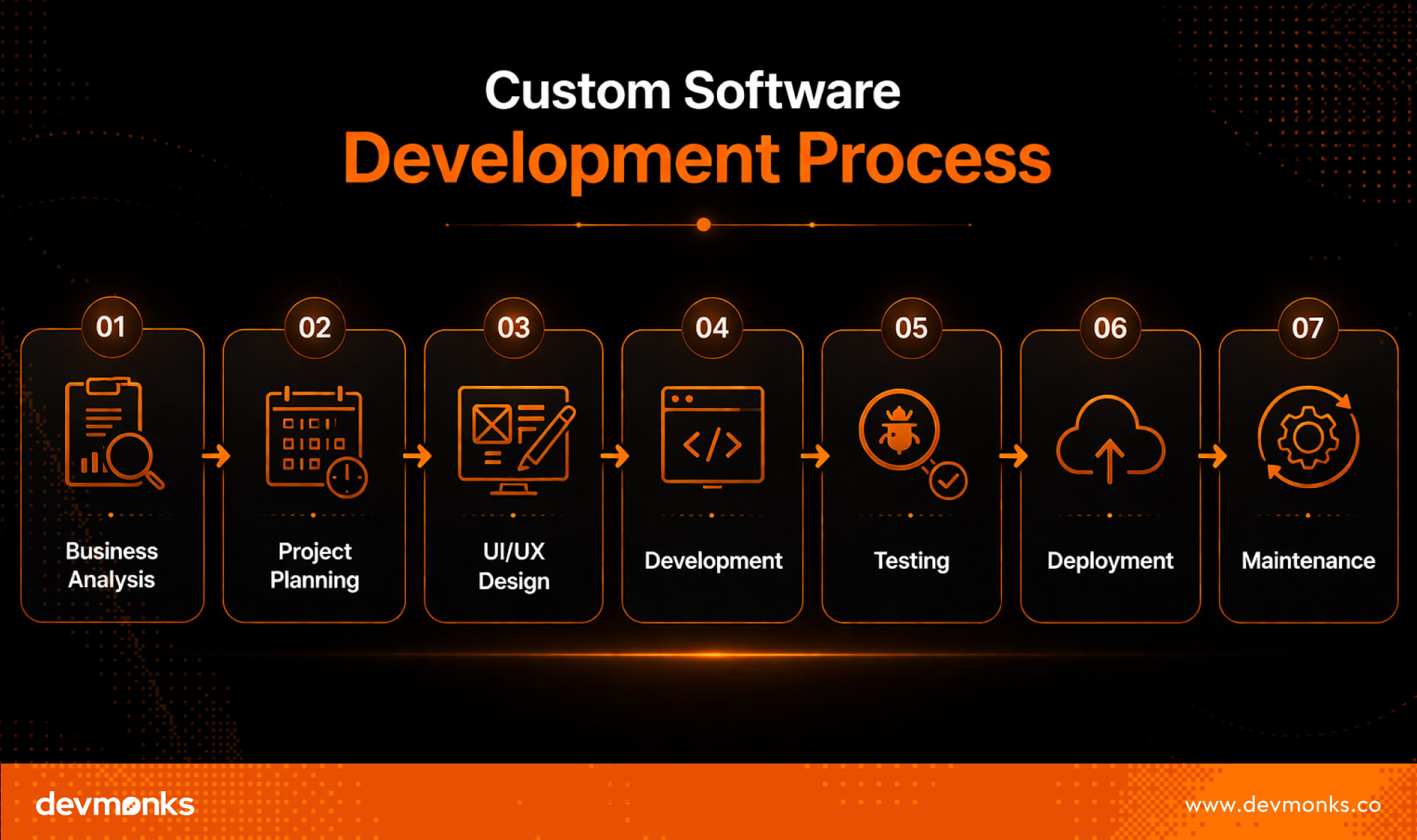
Custom Software Development Process (Step-by-Step)
Custom software is built through a structured process that turns business needs into a working digital solution.
Step 1: Business Analysis
The process starts by understanding the business goals, challenges, and expectations in detail. Teams study existing workflows and identify gaps that the software needs to solve.
This step builds a strong foundation, so the project moves in the right direction from the beginning.
Step 2: Project Planning
After analysis, the team creates a clear roadmap covering time, budget, and resources. They define the project scope and break it into manageable phases for better control. Good planning reduces risks and keeps the development process smooth and organized.
Step 3: UI/UX Design
After the planning phase is done, designers create the visual layout and overall user experience of the software.
They focus on making the interface simple, intuitive, and easy to use for end users. A well-designed system improves user satisfaction and makes daily tasks more efficient.
Step 4: Development
After that, developers begin coding the system based on approved designs and requirements. Features are built step by step, often in smaller iterations to allow quick improvements.
This phase turns ideas into a functional product that users can interact with.
Step 5: Testing
Once the development is done, the software goes through testing to identify and fix errors before release. Quality assurance checks performance, usability, and reliability under different conditions.
This step ensures the final product works smoothly without major issues.
Step 6: Deployment
Now that the testing is complete, the software is launched for real users. It is deployed on servers or cloud platforms to ensure stable performance and accessibility. Teams monitor the system closely during this phase to handle any early issues quickly.
Step 7: Maintenance
After launch, the software continues to evolve with regular updates and improvements. Developers fix bugs, enhance features, and adapt the system to changing business needs.
Ongoing maintenance keeps the software secure, efficient, and valuable over time.
When Should a Business Invest in Custom Software?
Businesses should invest in custom software when their operations require solutions that standard tools cannot fully support.
Key Indicators to Choose Custom Software
- Unique Workflows: When business processes are highly specific, custom software fits better than generic tools.
- Integration Needs: When multiple systems must connect smoothly, custom solutions ensure better system integration.
- Scalability Requirements: When rapid growth is expected, a scalable architecture helps the system expand easily.
- Competitive Advantage: When unique features can differentiate the business in the market.
- Enhanced Security: When sensitive data needs stronger, customized protection.
- High Cost of Inefficiency: When manual work or disconnected systems slow down performance and increase costs.
When to Choose Off-the-Shelf Instead
Off-the-shelf software is better when business needs are simple, standard, and require quick setup at a low cost. It also works well when customization is not necessary for daily operations.
How to Choose a Custom Software Development Company
Choosing the right software development company ensures better results and long-term success for your project.
Technical Expertise
Strong knowledge of the technology stack, programming languages, frameworks, and system architecture is essential for building reliable software.
Industry Experience
A company with domain knowledge understands real business challenges and delivers more practical solutions.
Development Methodology
Different project management approaches, like Agile or Waterfall, affect delivery speed and flexibility. Agile supports continuous improvement, while Waterfall follows a fixed step-by-step process.
FAQs
What are the disadvantages of custom software development?
Custom software requires a higher upfront investment compared to ready-made solutions, which can be challenging for small businesses. Development also takes more time, as the system is built from scratch based on specific requirements. It often requires ongoing technical support and maintenance. In addition, managing updates and scalability depends on the development team, which can increase long-term complexity if not handled properly.
What is a custom software development company?
A custom software development company builds software solutions customized to specific business needs. Instead of offering generic products, it designs and develops applications based on client requirements
What is bespoke software development?
Bespoke software development refers to creating software that is fully customized for a particular organization or purpose. It focuses on building solutions that match unique workflows and requirements rather than general use cases. This approach allows businesses to have complete control over features and functionality.
End Note
Custom software gives businesses the power to work smarter, scale faster, and stand out in competitive markets. It aligns technology with real operational needs, improving efficiency and control.
While the initial investment is higher, the long-term benefits often outweigh the costs. For growing businesses, it becomes a strategic asset that supports innovation, flexibility, and sustainable growth.
.png)
.svg)
Frequently Asked Questions
How can I discuss an AI MVP with Dev Monks?

Book a strategy call with your use case, existing systems, and project priorities. The team can help define an initial scope and the dependencies that need to be addressed.
Does using AI replace engineering review?
Dev Monks uses AI-assisted workflows with human-guided decisions. Product requirements, engineering choices, and testing remain part of the development process.
What AI development services does Dev Monks offer?
Dev Monks offers agentic AI solutions, custom language-model solutions, workflow automation, and RAG development. Its broader services include SaaS engineering, MVP development, backend integrations, and web and mobile applications.
Is Dev Monks an official OpenAI Select Partner?
Yes. Dev Monks is now an official OpenAI Select Partner within the OpenAI Partner Network.
How long does it usually take to complete a project?
We combine AI-driven workflows with product-first engineering to provide MVP development services for startups and enterprises. Our approach balances speed, reliability, and usability while keeping teams involved. We deliver production-ready, scalable solutions, not just prototypes or demos.
What makes Dev Monks different from other development companies?
We combine AI-driven workflows with product-first engineering to provide MVP development services for startups and enterprises. Our approach balances speed, reliability, and usability while keeping teams involved. We deliver production-ready, scalable solutions, not just prototypes or demos.
How Involved Will My Team be During Development?
We combine AI-driven workflows with product-first engineering to provide MVP development services for startups and enterprises. Our approach balances speed, reliability, and usability while keeping teams involved. We deliver production-ready, scalable solutions, not just prototypes or demos.
How involved will my team be during development?
We combine AI-driven workflows with product-first engineering to provide MVP development services for startups and enterprises. Our approach balances speed, reliability, and usability while keeping teams involved. We deliver production-ready, scalable solutions, not just prototypes or demos.
Do you develop both web and mobile applications?
We combine AI-driven workflows with product-first engineering to provide MVP development services for startups and enterprises. Our approach balances speed, reliability, and usability while keeping teams involved. We deliver production-ready, scalable solutions, not just prototypes or demos.
How can Dev Monks help my startup launch faster
We combine AI-driven workflows with product-first engineering to provide MVP development services for startups and enterprises. Our approach balances speed, reliability, and usability while keeping teams involved. We deliver production-ready, scalable solutions, not just prototypes or demos.
%20vs%20new%20Date().jpg)