What Is Enterprise Application Development? From Idea to Launch
.png)

.svg)
[ key takeways ]
- Enterprise apps make business operations faster and more organized.
- Choosing the right architecture keeps systems flexible and easy to scale.
- Strong security and smooth integration protect data and boost efficiency.
- New technologies like AI and low-code are shaping the future of software.
- Using enterprise applications smartly saves time, money, and effort.
.svg)
Enterprise application development is how companies build the powerful software that keeps their operations running smoothly. From managing finances to tracking customers, these applications handle it all behind the scenes.
If you work in business, tech, or just want to understand how big companies stay efficient, this topic matters. Knowing how these systems are built and used can give you an edge in decision-making and problem-solving.
In this article, we’ll explore what enterprise applications are, how they work, the benefits, challenges, and even the trends shaping the future of business software. Keep reading.
What Enterprise Application Development Really Is?
Enterprise application development is the process of building large software applications for large organizations, not individual users. These systems support daily operations, data management, and decision-making across the business.
Unlike regular apps, enterprise software handles complex processes and large amounts of data.
It connects different enterprise systems using a clear enterprise architecture for smooth performance. It creates reliable corporate software solutions that scale with business growth.
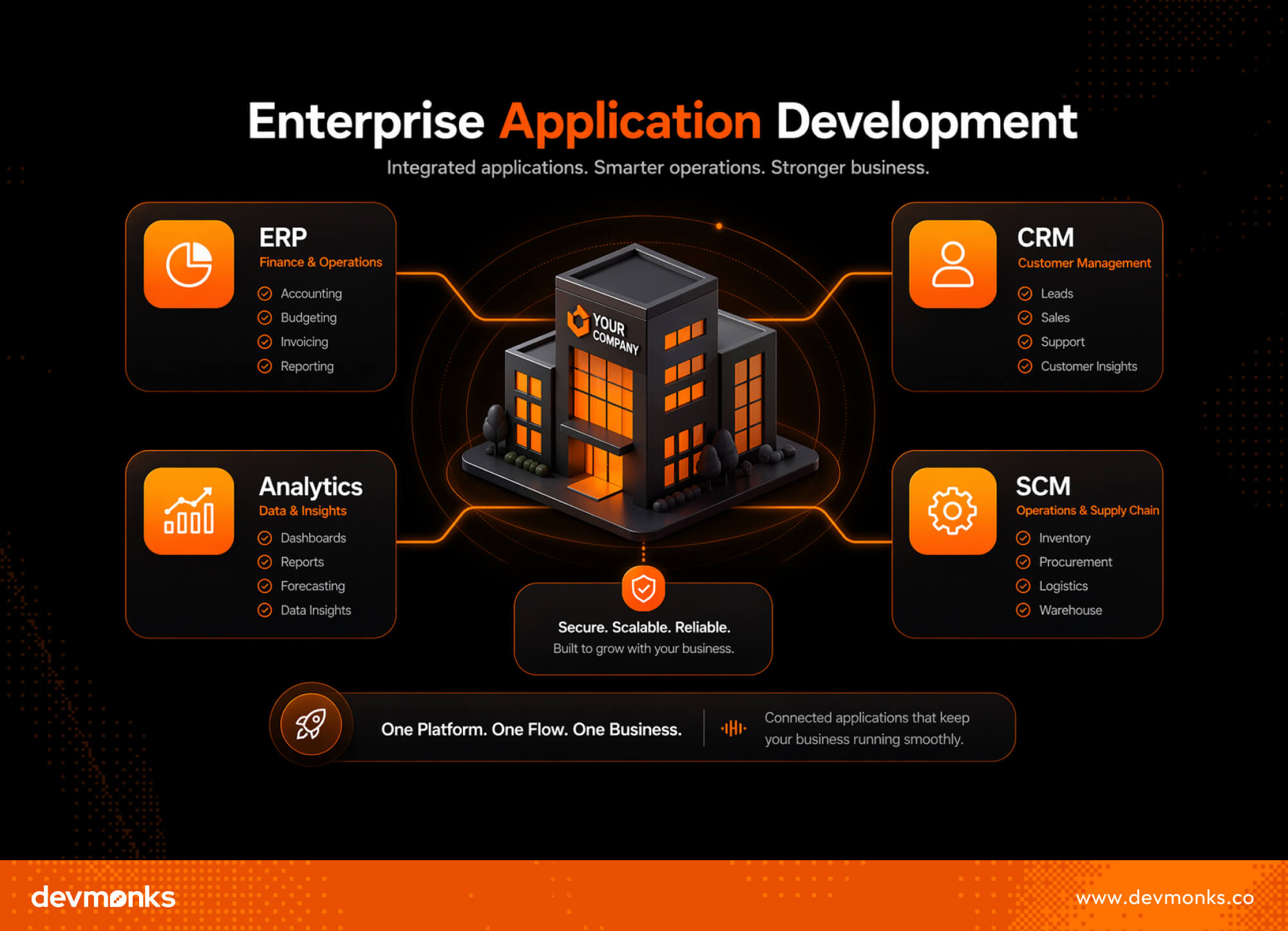
Enterprise applications are large-scale programs used to manage core business activities. They help companies handle finance, sales, operations, and customer relationships in one system.
ERP (Enterprise Resource Planning) and CRM (Customer Relationship Management) systems are major examples of enterprise applications. These tools act as business management software that keeps data organized and accessible.
Large organizations need software that can handle complexity and constant growth. Enterprise IT systems must support scalability, strong security, and smooth system integration.
They also follow a structured enterprise architecture to connect multiple departments without issues.
Key Characteristics of Enterprise Applications
Enterprise applications differ from standard apps due to their scale, complexity, and reliability needs. They are built as distributed systems using microservices on modern cloud infrastructure.
Here are the major characteristics of enterprise applications.
Scalability and High Performance
Enterprise applications must handle thousands of users and heavy workloads without slowing down. They often use cloud computing and strong cloud infrastructure to scale resources when needed.
Security and Compliance
These systems protect sensitive data by using strong authentication and encryption methods. They also follow standards like GDPR and ISO 27001 to meet legal requirements.
Integration with Multiple Systems
Enterprise applications connect different tools using APIs like REST API for smooth data exchange. This ensures system interoperability across departments and platforms.
Reliability and Availability
They use distributed computing, load balancing, and backups to avoid system failures. This keeps services running even during technical issues.
User Experience
Simple interfaces improve productivity and reduce training time for employees. Good design also helps users complete tasks faster with fewer errors.
Collaboration
They support teamwork through shared documents, messaging, and project management tools. This allows teams to stay connected and work together in real time.
Customization
Businesses can customize features to match their specific workflows and goals. This flexibility ensures the software fits unique business needs perfectly.

Types of Enterprise Applications
Common categories of enterprise applications that organizations use include ERP, CRM, SCM, and HRM systems for daily operations. 5 major types of enterprise applications are described below.
Enterprise Resource Planning (ERP)
ERP systems combine data from finance, operations, and supply into one platform. Tools like SAP ERP and Oracle ERP help teams access real-time business information.
Customer Relationship Management (CRM)
CRM platforms manage customer data, sales activities, and communication in one place. Salesforce is a popular tool that helps improve customer relationships and sales performance.
Supply Chain Management Systems
SCM systems help manage inventory, logistics, and supplier relationships efficiently. They improve coordination and reduce delays across the supply chain process.
Business Intelligence & Analytics Platforms
These tools analyze business data and create reports for better decision-making. Tableau and Microsoft Power BI help visualize data through clear dashboards.
Human Resource Applications
These applications automate human resource tasks like hiring, payroll, and performance tracking.
Enterprise Application Development Architecture
Enterprise applications are built using structured designs that define how systems work together. Enterprise application development architecture defines how different parts of an application are designed and connected.
Here are the major enterprise application development architectures.
Monolithic Architecture
Monolithic architecture builds the entire application as a single unified system. All components are connected and run together, which makes development simple at first. However, scaling or updating one part can affect the entire system.
Microservices Architecture
Microservices architecture breaks applications into small, independent services. Each service handles a specific function and can scale separately when needed. Tools like Kubernetes help manage and deploy these services efficiently.
Cloud-Native Enterprise Applications
Cloud-native applications are built to run on cloud platforms from the start. They use services from AWS and Microsoft Azure for flexibility and scalability. This approach allows faster updates, better performance, and easier system management.
Service-Oriented Architecture (SOA)
Service-Oriented Architecture focuses on reusable services that work across different systems. It helps businesses connect older enterprise systems without rebuilding everything from scratch.
Event-Driven Architecture
Event-driven architecture responds instantly to actions like clicks, updates, or transactions. This makes applications feel faster and more responsive in real-world business situations.
Layered (N-Tier) Architecture
Layered architecture separates the system into presentation, logic, and data layers. This structure makes updates easier and keeps the application organized as it grows.
Serverless Architecture
Serverless architecture removes the need to manage servers or infrastructure manually. It scales automatically and lets teams focus more on features than maintenance.
Enterprise Application Development Process
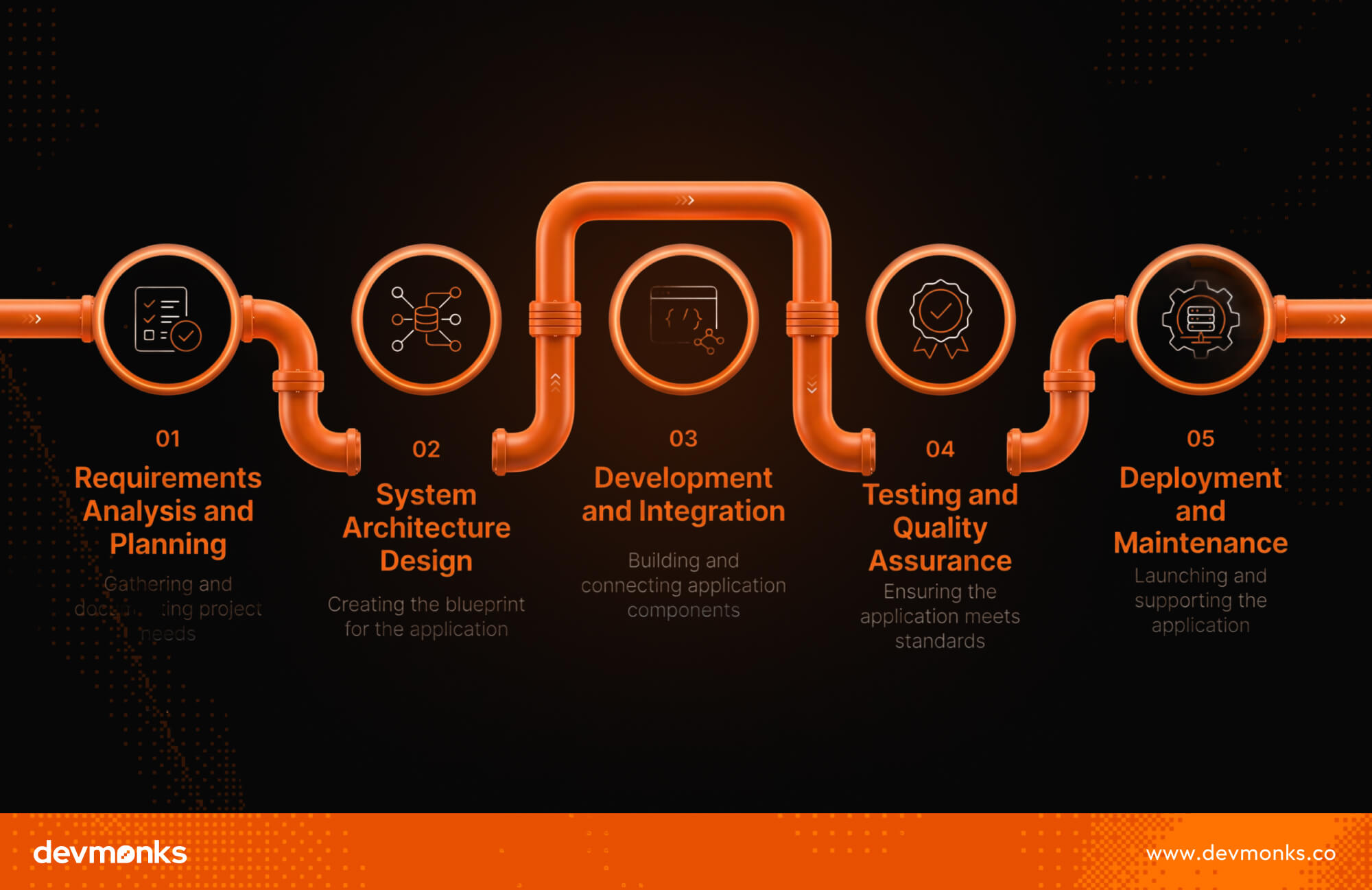
Enterprise application development follows a step-by-step process to build reliable systems. Teams often use Agile methodology and DevOps to keep development fast and flexible.
Step 1: Requirements Analysis and Planning
First, teams work with stakeholders to understand business goals and system needs. They define clear requirements so the project starts in the right direction.
Step 2: System Architecture Design
After that, developers plan the enterprise system architecture carefully. They decide how different components will connect and handle future growth.
Step 3: Development and Integration
Next comes development, where teams write code and build application features. They also integrate APIs and connect the system with other business tools.
Step 4: Testing and Quality Assurance
Once the development is done, the application goes through testing to find and fix errors. Teams use automated testing to ensure quality and consistent performance.
Step 5: Deployment and Maintenance
Finally, the application is deployed using DevOps and CI/CD pipelines. After launch, teams monitor performance and maintain the system regularly.
Benefits of Enterprise Application Development
Enterprise applications offer the following benefits that help businesses work smarter, faster, and safer.
- Better Operational Efficiency: Enterprise applications streamline workflows, which helps teams complete tasks faster and easier.
- More Accurate Data and Decisions: Centralized systems reduce errors and give leaders reliable information for smarter choices.
- Centralized Information: All data is stored in one place, which makes it easy to access and manage.
- Automation of Routine Tasks: Repetitive work is handled automatically, which frees employees to focus on important tasks.
- Scalable and Flexible Systems: Applications can grow with the business and adapt to changing needs without major changes.
- Improved Team Collaboration: Shared tools and real-time updates help employees work together smoothly.
- Stronger Security: Enterprise workflow systems protect sensitive data and keep systems safe from threats.
- Lower Long-Term Costs: Efficient processes and fewer errors save money over time.
- Better Experience for Customers and Staff: Streamlined systems make it easier for employees to work and customers to get service quickly.
Challenges in Enterprise Application Development
Building enterprise applications comes with its own set of challenges that businesses need to navigate carefully. Here are some radical challenges.
- Difficulty Integrating Systems: Connecting different software and tools can be tricky and may cause delays if not planned properly.
- Old Legacy Systems: Older systems can limit new software features and make integration more complicated.
- Data Security Risks: Protecting sensitive business and customer data is always a major concern.
- High Development Costs: Creating enterprise applications often requires significant time, money, and skilled resources.
- User Adoption and Experience: Even powerful systems fail if employees find them hard to use or understand.
- Complex Technical Environment: Managing multiple technologies, servers, and platforms adds extra complexity.
- Limited Development Resources: A shortage of skilled developers or time can slow the project and affect quality.
Best Practices for Enterprise Application Development
Following proven strategies can help businesses build enterprise applications that are reliable, scalable, and user-friendly.
- Use Microservices Architecture: Break applications into smaller, independent modules to make them easier to manage and scale.
- Make Security a Priority: Protect data from threats by adding strong authentication, encryption, and regular checks.
- Plan for Scalability: Design systems to handle more users and data as the business grows without slowing down.
- Adopt DevOps Pipelines: Continuous integration and delivery help deploy updates faster and reduce errors.
- Focus on User-Friendly Design: Build intuitive interfaces that make it easy for employees to navigate and work efficiently.
- Integrate Smoothly with Existing Systems: Connect new applications with legacy systems to avoid disruptions and data silos.
- Automate Testing: Use automated tests to catch issues early and maintain high-quality software.
- Manage and Govern Data Properly: Keep data organized, accurate, and compliant with regulations for better decision-making.
For organizations looking to build a reliable and scalable enterprise application, partnering with an experienced team like Dev Monk can make the process smoother and more efficient.
Enterprise Application Development Examples
Many organizations rely on enterprise applications to manage operations, data, and communication efficiently.
- SAP: SAP provides ERP solutions that help businesses manage finance, supply chains, and operations in one system.
- Oracle ERP: Oracle ERP centralizes data and streamlines processes for large organizations, which makes decision-making faster.
- Salesforce: Salesforce is a CRM platform that helps companies manage customer relationships and track sales effectively.
- Microsoft Dynamics: Microsoft Dynamics offers tools for finance, operations, and customer service under a unified system.
- Workday: Workday automates HR and payroll processes, which helps companies manage employees smoothly.
- Slack: Slack is a communication platform that keeps teams connected with messaging, files, and channels.
- JIRA: JIRA is a project management tool used to track tasks, bugs, and team workflows efficiently.
Future Trends in Enterprise Application Development
Enterprise application development is constantly evolving, with new technologies shaping smarter, faster, and more flexible systems.
- AI-Powered Enterprise Software: Artificial intelligence helps automate tasks, analyze data, and provide smarter insights for businesses.
- Low-Code and No-Code Platforms: These platforms allow faster app development with minimal coding, which makes it easier for teams to build tools.
- Composable Enterprise Systems: Businesses can mix and match modular components to create custom systems that fit their unique needs.
- Edge Computing Integration: Processing data closer to devices improves speed, reduces delays, and supports real-time operations.
- Adaptive User Experiences: Applications are becoming more intuitive by adjusting interfaces to user behavior for better productivity.
- Cloud-Native Architecture: Building software for the cloud from the start ensures scalability, easy updates, and smoother performance.
End Note
Enterprise applications give businesses the power to streamline processes, connect teams, and make smarter decisions. By choosing the right systems, companies can automate routine tasks, improve collaboration, and scale operations efficiently.
Understanding best practices, challenges, and emerging trends allows organizations to fully leverage these tools and gain real advantages from their technology.
.png)
.svg)
Frequently Asked Questions
How can I discuss an AI MVP with Dev Monks?

Book a strategy call with your use case, existing systems, and project priorities. The team can help define an initial scope and the dependencies that need to be addressed.
Does using AI replace engineering review?
Dev Monks uses AI-assisted workflows with human-guided decisions. Product requirements, engineering choices, and testing remain part of the development process.
What AI development services does Dev Monks offer?
Dev Monks offers agentic AI solutions, custom language-model solutions, workflow automation, and RAG development. Its broader services include SaaS engineering, MVP development, backend integrations, and web and mobile applications.
Is Dev Monks an official OpenAI Select Partner?
Yes. Dev Monks is now an official OpenAI Select Partner within the OpenAI Partner Network.
How long does it usually take to complete a project?
We combine AI-driven workflows with product-first engineering to provide MVP development services for startups and enterprises. Our approach balances speed, reliability, and usability while keeping teams involved. We deliver production-ready, scalable solutions, not just prototypes or demos.
What makes Dev Monks different from other development companies?
We combine AI-driven workflows with product-first engineering to provide MVP development services for startups and enterprises. Our approach balances speed, reliability, and usability while keeping teams involved. We deliver production-ready, scalable solutions, not just prototypes or demos.
How Involved Will My Team be During Development?
We combine AI-driven workflows with product-first engineering to provide MVP development services for startups and enterprises. Our approach balances speed, reliability, and usability while keeping teams involved. We deliver production-ready, scalable solutions, not just prototypes or demos.
How involved will my team be during development?
We combine AI-driven workflows with product-first engineering to provide MVP development services for startups and enterprises. Our approach balances speed, reliability, and usability while keeping teams involved. We deliver production-ready, scalable solutions, not just prototypes or demos.
Do you develop both web and mobile applications?
We combine AI-driven workflows with product-first engineering to provide MVP development services for startups and enterprises. Our approach balances speed, reliability, and usability while keeping teams involved. We deliver production-ready, scalable solutions, not just prototypes or demos.
How can Dev Monks help my startup launch faster
We combine AI-driven workflows with product-first engineering to provide MVP development services for startups and enterprises. Our approach balances speed, reliability, and usability while keeping teams involved. We deliver production-ready, scalable solutions, not just prototypes or demos.
%20vs%20new%20Date().jpg)