Flight Booking App Development: Complete 2026 Guide


[ key takeways ]
- Flight booking app development builds platforms for searching, booking, and managing airline tickets.
- GDS and airline APIs provide real-time flight data, pricing, and reservations.
- User-friendly features and AI improve customer experience, engagement, and booking conversions.
- The right technology stack ensures scalability, security, and reliable app performance.
- Starting with an MVP reduces costs and validates your business idea efficiently.

Flight booking app development is the process of building a digital platform that lets users search flights, compare fares, book tickets, make secure payments, and manage their trips in one place.
It combines user-friendly design, airline APIs, payment gateways, and scalable technologies to deliver a smooth booking experience.
Understanding how these apps are developed helps businesses choose the right features, technology stack, and budget before starting a project.
Whether you're an airline, travel agency, OTA, or startup, knowing the development process can reduce costly mistakes and improve your chances of success. Read on to learn everything you need to build a successful flight booking app.
What Is Flight Booking App Development?
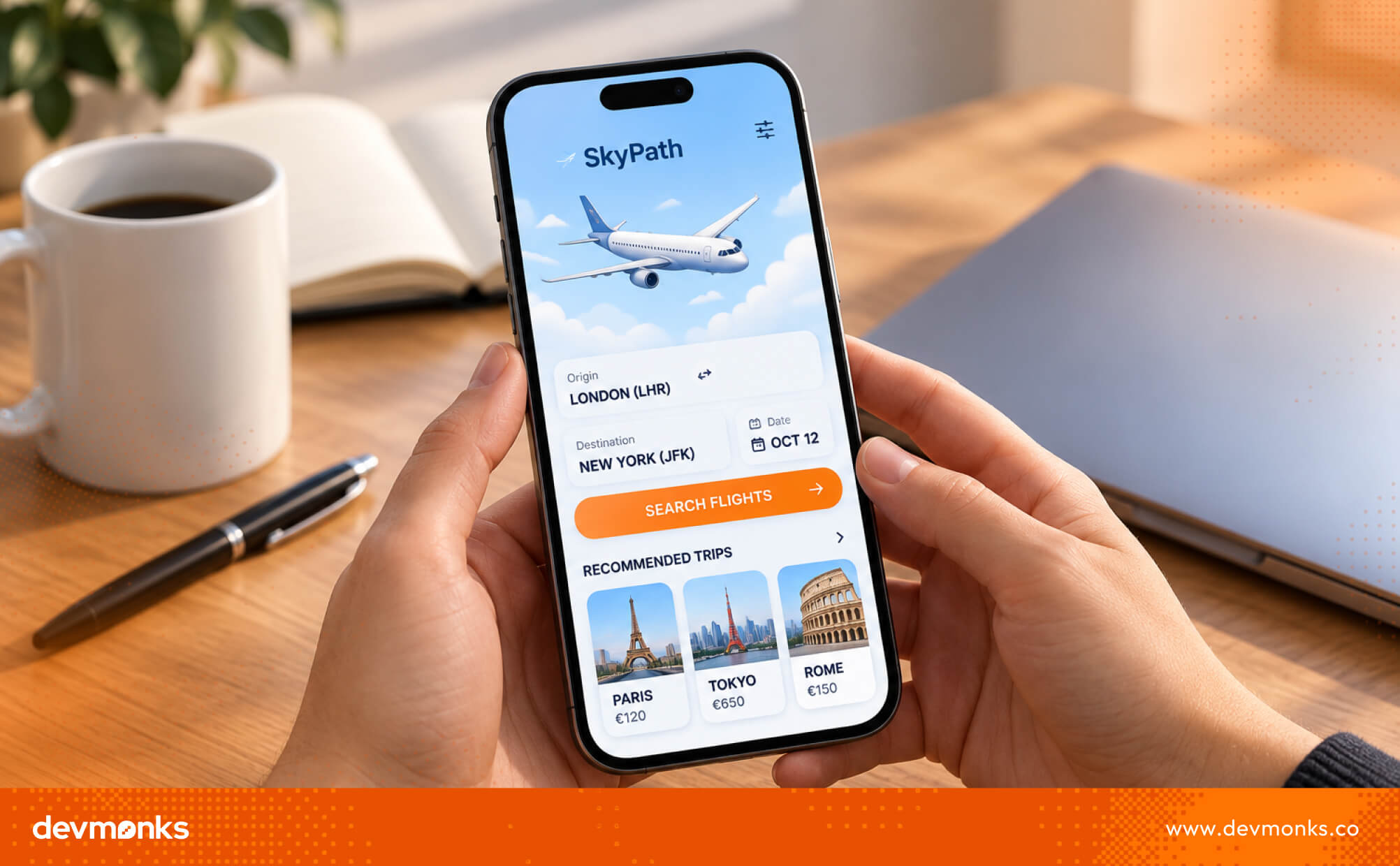
Flight booking app development is the process of building a flight booking app that lets users search, compare, and book airline tickets online.
These apps connect with an Airline Reservation System and often integrate a Global Distribution System (GDS) to display real-time flight schedules, seat availability, and fares.
Many platforms also follow IATA standards for secure and reliable airline operations. Businesses such as airlines, Online Travel Agency (OTA) companies, travel agencies, and startups invest in travel app development to offer smooth online travel booking experiences.
A modern travel booking platform also includes airline reservation software for managing bookings, payments, and customer information.
Types of Flight Booking Applications
- Airline booking apps: Direct booking for a single airline.
- OTA apps: Multi-airline booking platforms like Expedia.
- Corporate travel apps: Manage employee business travel.
- Charter flight booking apps: Book private or charter flights.
- Flight aggregator apps: Compare fares across platforms like Skyscanner and Kayak.
Businesses such as airlines, travel agencies, and startups invest in travel app development to offer smooth online travel booking experiences, often working with reliable development agencies like Dev Monks to turn their ideas into high-performing apps.
How Does a Flight Booking App Work?
A flight booking app follows a simple booking workflow that takes users from flight search to ticket confirmation.
Behind the scenes, the app connects with providers like Amadeus, Sabre, or Travelport to access real-time airline inventory and complete the flight reservation process through a secure booking engine.
Flight Search
Users enter their departure and destination airports, travel dates, number of passengers, and travel class. They can also apply filters such as price, airline, stops, or departure time to find the best flight.
Real-Time Fare Comparison
The app compares fares from different airlines, displays available fare classes, and updates prices using dynamic pricing. Smart sorting helps users quickly find the most suitable option.
Passenger Information Collection
After selecting a flight, travelers enter their personal details, passport information if required, seat preferences, and saved traveler profiles for faster bookings.
Payment Processing
The app calculates taxes and final fares before users pay through secure gateways like Stripe or PayPal. Fraud prevention tools help protect every transaction.
Ticket Confirmation & E-Ticket Generation
Once payment succeeds, the system generates a PNR, creates an e-ticket with a QR code, and sends the booking confirmation by email. Users can also access their mobile ticket directly from the app.
Must-Have Features of a Flight Booking App
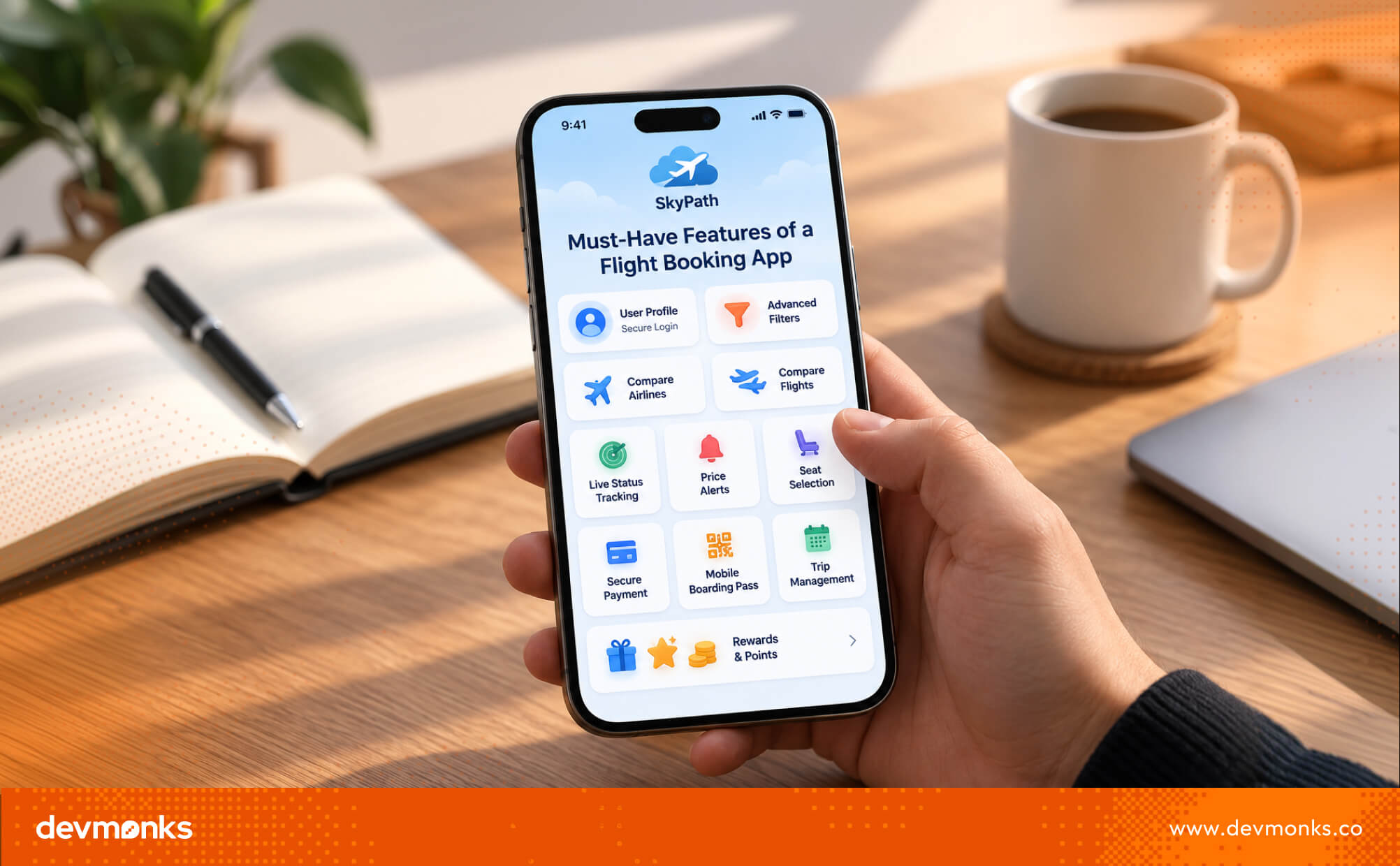
The right booking features make a flight booking app faster, easier, and more reliable.
They also improve the overall airline booking experience and encourage users to return. Below are the essential travel app features every modern platform should include.
User Registration & Login
Allow users to sign up with email, phone, or social accounts using OAuth. Firebase Authentication can simplify secure login and account management.
Flight Search with Advanced Filters
Help users search by destination, travel dates, airline, budget, stops, departure time, and cabin class.
Flight Comparison
Show multiple airlines side by side so users can compare prices, flight duration, baggage, and layovers.
Live Flight Status Tracking
Provide real-time updates on delays, gate changes, departures, and arrivals.
Price Alerts & Fare Notifications
Notify users when ticket prices drop or when special deals become available.
Seat Selection
Let travelers choose or upgrade their seats before completing the booking.
Secure Payment Gateway
Support multiple payment methods with encrypted and secure transactions.
Mobile Boarding Pass
Store digital boarding passes inside the app for quick airport access.
Booking History & Trip Management
Allow users to view past bookings, manage upcoming trips, and cancel or modify reservations.
Loyalty Programs & Reward Points
Reward frequent travelers with points, exclusive offers, and member-only benefits.
Advanced Features That Improve User Experience
Advanced features help a flight booking app stand out by improving convenience, personalization, and customer satisfaction. They also increase engagement, encourage repeat bookings, and create new revenue opportunities through smarter travel services.
AI-Powered Travel Recommendations
Use Artificial Intelligence and Machine Learning to analyze user behavior and provide personalized recommendations for flights, destinations, and travel dates.
An AI travel assistant powered by OpenAI can also answer questions and simplify trip planning.
Dynamic Fare Prediction
Predict whether flight prices are likely to increase or decrease, which helps users make smart booking decisions and save money.
Voice Search
Allow travelers to search for flights using voice commands for a faster, hands-free experience.
Multi-City Trip Planning
Enable users to book multiple destinations in one itinerary without making separate reservations.
Travel Insurance Integration
Offer travel insurance during checkout to protect users against cancellations, delays, or lost baggage.
Nearby Hotel & Car Rental Suggestions
Recommend hotels and rental cars based on the user's destination, which makes travel planning more convenient.
Chatbot Customer Support
Provide 24/7 instant support for bookings, cancellations, refunds, and common travel questions.
Flight Booking APIs Required for Development
A flight booking app relies on several travel APIs to deliver real-time search results, bookings, payments, and notifications.
Proper API integration ensures users get accurate flight information while enjoying a fast and secure booking experience. Strong airline API integration also makes the app scalable and easier to maintain.
Global Distribution System (GDS) APIs
GDS platforms such as Amadeus, Sabre, and Travelport connect airlines with travel applications. They provide access to flight schedules, fares, seat availability, and booking services from multiple airlines through a single integration.
Airline Direct APIs
Some airlines offer their own APIs, giving developers direct access to flight inventory and exclusive fares. While these APIs may provide better pricing and faster updates, they only support a single airline and require separate integrations.
Payment APIs
Secure payment APIs such as Stripe, PayPal, Apple Pay, Google Pay, and local payment methods allow users to complete transactions safely and conveniently.
Maps & Location APIs
Services like the Google Maps API help users locate airports, view nearby hotels, and get directions.
Push Notification APIs
These APIs send instant updates about booking confirmations, gate changes, delays, cancellations, and promotional offers.
Authentication APIs
Authentication APIs support secure login through email, phone, or social accounts while protecting user data and accounts.
Technology Stack for Flight Booking App Development
Choosing the right technology stack is essential for building a fast, secure, and reliable flight booking app. A modern stack supports scalable architecture, handles high traffic, and ensures smooth performance with a strong cloud infrastructure.
Frontend Technologies
Frameworks like Flutter and React Native allow developers to build high-quality Android and iOS apps from a single codebase, which reduces development time and cost.
Backend Technologies
Technologies such as Node.js help manage user authentication, flight searches, bookings, payments, and API integrations while delivering fast performance.
Database Selection
Databases like PostgreSQL securely store user accounts, booking details, payment records, and flight information while supporting quick data retrieval.
Cloud Infrastructure
Cloud platforms such as AWS provide scalable hosting, automatic backups, load balancing, and high availability to keep the app running smoothly during peak booking periods.
DevOps & CI/CD
DevOps practices and CI/CD pipelines automate testing, deployment, and updates, helping teams release new features quickly with fewer errors.
Security Technologies
Security measures such as data encryption, secure APIs, multi-factor authentication, and regular security monitoring protect user information and financial transactions from cyber threats.
3 Best Flight Booking App Development
Choosing the right flight booking app development company can make a big difference in building a smooth and reliable travel platform. Here are three companies worth considering.
1. Dev Monks
Dev Monks is one of the most promising and fast-growing flight booking app development companies. The team builds secure, scalable, and user-friendly travel applications for startups, travel agencies, OTAs, and established businesses.
From flight booking platforms and custom software to web and mobile app development, Dev Monks offers end-to-end development services.
Their focus on modern technologies, smooth user experiences, and reliable support makes them a strong choice for businesses looking to launch or expand travel solutions.
2. Appetiser
Appetiser is an Australian app development company known for creating modern, user-friendly mobile applications. The company works with both startups and large enterprises, delivering visually appealing and scalable digital products.
Its team emphasizes intuitive design, smooth performance, and custom solutions that help travel businesses meet changing customer expectations.
3. SoluLab
SoluLab develops travel applications that combine advanced technology with a strong focus on user experience.
The company builds hotel and flight booking platforms with real-time reservation capabilities, AI-powered search and filtering, and secure support for multiple currencies and payment methods.
Its solutions are designed to simplify travel planning while providing a seamless booking experience for users worldwide.
Flight Booking App Development Process
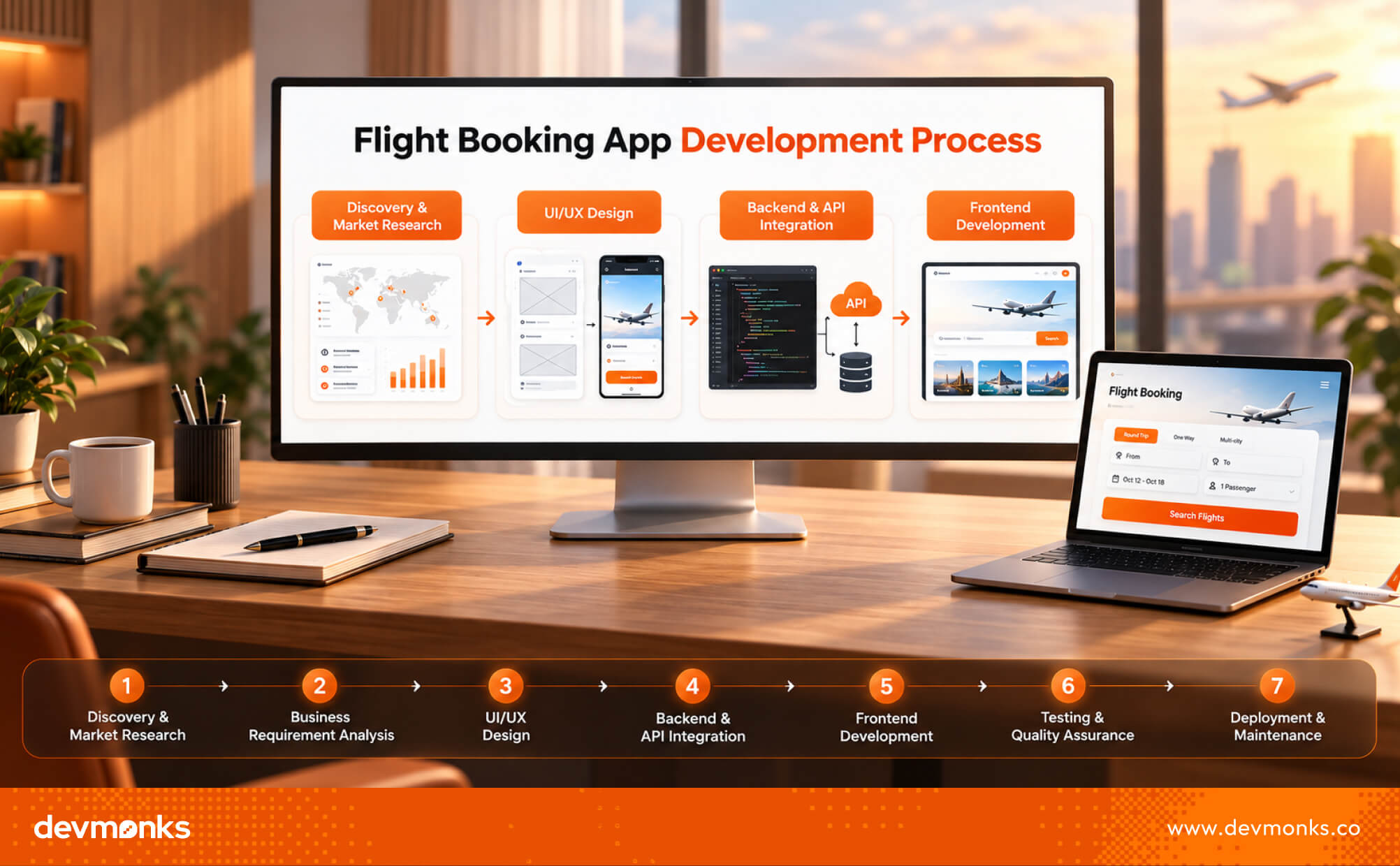
Building a successful flight booking app requires a structured software development lifecycle. Each stage helps ensure the app is secure, easy to use, and ready to handle real-world travel bookings.
Many development teams follow Agile and Scrum methodologies to deliver features faster while adapting to changing business needs.
Discovery & Market Research
Start by identifying your target audience, competitors, business goals, and unique selling points. This helps validate your idea before development begins.
Business Requirement Analysis
Define the app's features, booking workflow, third-party integrations, budget, and technical requirements. A clear plan reduces delays later in the project.
UI/UX Design
Design user-friendly wireframes and interactive prototypes using tools like Figma. The goal is to create a smooth booking experience with simple navigation.
Backend Development
Develop the server, databases, user management, payment processing, and booking logic that power the application.
Frontend Development
Build responsive mobile and web interfaces that allow users to search flights, compare fares, and manage bookings with ease.
API Integration
Integrate airline, GDS, payment, maps, and notification APIs to provide real-time flight data and secure transactions.
Testing & Quality Assurance
Test every feature for performance, security, compatibility, and usability to identify and fix issues before launch.
Following proven mobile app development best practices can improve usability, reduce development issues, and create a better booking experience from day one.
Deployment
Release the app on the App Store, Google Play, or the web after completing all final checks.
Maintenance & Updates
Monitor performance, fix bugs, improve security, and regularly add new features based on user feedback and market trends.
Flight Booking App Development Cost
The development cost of a flight booking app depends on its features, integrations, and overall complexity.
Most businesses start with an MVP to validate their idea before investing in a larger platform. Proper project estimation helps control software pricing and avoid unexpected expenses.
If you're estimating your budget, understanding the broader factors that influence mobile app development costs can help you plan more accurately before requesting project quotes.
MVP Cost
A basic MVP with core features such as user registration, flight search, booking, and payments typically costs $20,000–$40,000.
Mid-Level Product Cost
A mid-level app with advanced search, user profiles, notifications, and multiple API integrations generally costs $40,000–$80,000.
Enterprise Flight Booking App Cost
A full-scale enterprise platform with GDS integrations, AI features, loyalty programs, and high scalability usually starts at $100,000 and can exceed $250,000.
Factors Affecting Development Cost
Key cost factors include the number of platforms (iOS, Android, or both), API licensing fees, UI complexity, custom features, security requirements, and the development team's location.
Offshore teams often cost less than North American or Western European teams while offering comparable technical expertise.
Common Challenges in Flight Booking App Development
Building a flight booking app involves several technical and operational challenges. Addressing them early improves scalability, strengthens payment security, and delivers a better user experience.
Real-Time Flight Inventory Synchronization
Flight availability and fares change constantly. Regular API synchronization helps display accurate prices and prevents overbooking.
API Rate Limits
Many airlines and GDS APIs limit the number of requests. Caching frequently accessed data and optimizing API calls reduce delays and improve performance.
High User Traffic
Booking demand can spike during holidays and promotions. A scalable cloud infrastructure with load balancing helps the app handle heavy traffic without slowing down.
Payment Security
Handling online payments requires strong encryption, fraud detection, and compliance with PCI DSS standards to protect financial information.
Data Privacy Compliance
Flight booking apps collect personal and passport details. Following GDPR and other privacy regulations helps protect user data and builds customer trust.
Multi-Currency & Localization
Supporting multiple currencies, languages, time zones, and local payment methods creates a better experience for international travelers and helps businesses reach a global audience.
Best Practices for Building a Successful Flight Booking App
A successful flight booking app is fast, secure, and easy to use. Following these best practices improves user satisfaction, increases bookings, and encourages repeat customers.
- Fast search experience: Display accurate flight results quickly with optimized search and real-time data.
- Simple booking flow: Keep the booking process short and reduce unnecessary steps to minimize cart abandonment.
- Mobile-first UX: Design the app for smartphones first, ensuring smooth navigation and responsive layouts.
- Accessibility: Support screen readers, readable fonts, clear color contrast, and easy navigation for all users.
- Security best practices: Protect user data with encryption, secure authentication, and trusted payment gateways.
- Personalization: Recommend flights, destinations, and offers based on user preferences and booking history.
- Offline access: Let users view saved itineraries, boarding passes, and booking details without an internet connection.
- Error prevention: Validate user inputs and provide clear error messages to reduce booking mistakes.
Future Trends in Flight Booking App Development
The future of flight booking apps will focus on smarter, faster, and more personalized travel experiences. New technologies are changing how people search, book, and manage their trips.
AI Travel Assistants
Generative AI will power virtual travel assistants that help users plan trips, answer questions, and complete bookings.
Predictive Flight Pricing
AI will analyze booking patterns to predict future fare changes and recommend the best time to book.
Conversational Booking
Users will book flights through natural conversations using chatbots and voice assistants instead of traditional search forms.
Blockchain-Based Ticketing
Blockchain can improve ticket security, reduce fraud, and simplify ticket verification and transfers.
Sustainable Travel Recommendations
Apps will suggest eco-friendly flights and display carbon emissions to help travelers make greener choices.
Hyper-Personalization
Using IoT devices and AI, apps will deliver highly personalized flight offers, travel updates, and recommendations based on user preferences and real-time behavior.
FAQs
What is the difference between GDS and airline APIs?
A GDS API connects your app to multiple airlines through a single integration, which makes it easier to compare flights. An airline API provides direct access to one airline's inventory, which may offer exclusive fares but requires separate integrations for each airline.
How long does flight booking app development take?
A basic MVP usually takes 3–5 months to develop. A feature-rich flight booking app with GDS integrations, AI features, and advanced security can take 6–12 months, depending on the project's complexity, team size, and customization requirements.
How do flight booking apps make money?
Flight booking apps earn revenue through booking commissions, service fees, airline partnerships, advertisements, travel insurance, hotel and car rental bookings, premium subscriptions, and affiliate marketing. Some also generate income through loyalty programs and value-added travel services.
Conclusion
Building a successful flight booking app requires the right technology stack, reliable API integrations, and a user-focused design.
Prioritizing scalability, security, and performance helps create a seamless booking experience that grows with your business.
If you're planning to launch a flight booking platform, partnering with an experienced team like Dev Monks can help turn your idea into a reliable, high-performing travel solution.
Flight booking app development is the process of building a digital platform that lets users search flights, compare fares, book tickets, make secure payments, and manage their trips in one place.
It combines user-friendly design, airline APIs, payment gateways, and scalable technologies to deliver a smooth booking experience.
Understanding how these apps are developed helps businesses choose the right features, technology stack, and budget before starting a project.
Whether you're an airline, travel agency, OTA, or startup, knowing the development process can reduce costly mistakes and improve your chances of success. Read on to learn everything you need to build a successful flight booking app.


Frequently Asked Questions
How can I discuss an AI MVP with Dev Monks?

Book a strategy call with your use case, existing systems, and project priorities. The team can help define an initial scope and the dependencies that need to be addressed.
Does using AI replace engineering review?
Dev Monks uses AI-assisted workflows with human-guided decisions. Product requirements, engineering choices, and testing remain part of the development process.
What AI development services does Dev Monks offer?
Dev Monks offers agentic AI solutions, custom language-model solutions, workflow automation, and RAG development. Its broader services include SaaS engineering, MVP development, backend integrations, and web and mobile applications.
Is Dev Monks an official OpenAI Select Partner?
Yes. Dev Monks is now an official OpenAI Select Partner within the OpenAI Partner Network.
How long does it usually take to complete a project?
We combine AI-driven workflows with product-first engineering to provide MVP development services for startups and enterprises. Our approach balances speed, reliability, and usability while keeping teams involved. We deliver production-ready, scalable solutions, not just prototypes or demos.
What makes Dev Monks different from other development companies?
We combine AI-driven workflows with product-first engineering to provide MVP development services for startups and enterprises. Our approach balances speed, reliability, and usability while keeping teams involved. We deliver production-ready, scalable solutions, not just prototypes or demos.
How Involved Will My Team be During Development?
We combine AI-driven workflows with product-first engineering to provide MVP development services for startups and enterprises. Our approach balances speed, reliability, and usability while keeping teams involved. We deliver production-ready, scalable solutions, not just prototypes or demos.
How involved will my team be during development?
We combine AI-driven workflows with product-first engineering to provide MVP development services for startups and enterprises. Our approach balances speed, reliability, and usability while keeping teams involved. We deliver production-ready, scalable solutions, not just prototypes or demos.
Do you develop both web and mobile applications?
We combine AI-driven workflows with product-first engineering to provide MVP development services for startups and enterprises. Our approach balances speed, reliability, and usability while keeping teams involved. We deliver production-ready, scalable solutions, not just prototypes or demos.
How can Dev Monks help my startup launch faster
We combine AI-driven workflows with product-first engineering to provide MVP development services for startups and enterprises. Our approach balances speed, reliability, and usability while keeping teams involved. We deliver production-ready, scalable solutions, not just prototypes or demos.