What Are the Challenges of Enterprise Application Development?
.png)

.svg)
[ key takeways ]
- Enterprise application development is complex due to scale, security, and integrations.
- Scalability and performance are critical for handling large enterprise user loads.
- Security and compliance ensure safe data handling and regulatory adherence.
- Legacy systems and integration issues slow down modernization and system upgrades.
- Strong architecture and planning improve long-term enterprise software success.
.svg)
Enterprise application development is very different from building regular software. It deals with complex systems that support entire organizations, not just individual users.
These enterprise applications must handle scalability, security, integrations, and scalable architecture while also working with legacy systems that many businesses still depend on.
Because of this complexity, enterprise software directly impacts business operations, efficiency, and long-term growth. It also plays a key role in digital transformation, as it helps companies move from old systems to modern, connected platforms.
Understanding these challenges is important for anyone involved in building or managing enterprise systems. It helps in making better decisions and avoiding costly mistakes in the future. Read the article to understand the key challenges one by one.
What Is Enterprise Application Development?
Enterprise application development is the process of building large-scale software systems that help businesses manage daily operations across different departments and teams.
These applications include ERP systems, CRM platforms, SaaS tools, enterprise software, and workflow automation solutions. They help companies organize data, improve communication, and increase productivity.
Enterprise-grade applications are designed for scalability, strong security, multi-user support, integrations, and high reliability. Many use cloud infrastructure, authentication systems, and distributed systems to handle large amounts of data and users.
Enterprise development is more complex than traditional software because it involves enterprise architecture, DevOps practices, multiple stakeholders, and higher operational risks. Managing technical debt also becomes a major challenge over time.
If your business needs a reliable agency for enterprise application development, Dev Monks is a great option. They help companies build scalable enterprise software, SaaS platforms, and workflow automation systems that support long-term business growth.
Scalability Challenges in Enterprise Application Development
As enterprise applications grow, keeping them fast, stable, and responsive for a large number of users becomes a major challenge.
Managing High Concurrent User Loads
One of the biggest challenges in enterprise application development is handling thousands or even millions of users at the same time. During traffic spikes, applications can slow down or even crash because of performance bottlenecks.
Businesses need strong scaling strategies to keep systems running smoothly. Technologies like load balancing help distribute traffic across servers, while autoscaling automatically adds more resources when demand increases.
Many companies also use distributed architecture and Kubernetes to improve performance and maintain system stability during heavy usage.
Database Scaling and Data Consistency Issues
As enterprise applications grow, managing data becomes more difficult. Large systems often use SQL and NoSQL databases to store different types of information. To improve speed and reliability, businesses use database replication and sharding.
However, keeping all data synchronized creates data consistency challenges, especially when updates happen across multiple servers at the same time.
Infrastructure Cost vs Performance Optimization
Scaling enterprise applications also increases cloud computing costs. Services like AWS and Azure make it easy to expand infrastructure, but higher performance often means higher expenses.
Businesses must balance speed, reliability, and budget through smart infrastructure optimization strategies to avoid overspending while still delivering a smooth user experience.

Security and Compliance Challenges
Protecting business data and meeting legal requirements are some of the most important challenges in enterprise application development.
Enterprise Authentication and Access Management
Enterprise applications need strong authentication and access control systems to protect sensitive information. Businesses use OAuth, RBAC, MFA, SSO, and IAM solutions to manage user identities and permissions.
These systems help ensure that employees only access the data and tools they are allowed to use.
Data Privacy and Regulatory Compliance
Enterprise organizations must follow strict rules for handling customer and business data. Regulations like GDPR, HIPAA, and SOC 2 require companies to maintain secure systems and proper compliance management practices.
Failing to meet these standards can lead to legal problems, financial loss, and damage to brand reputation.
Cybersecurity Threats in Enterprise Systems
Enterprise systems are common targets for ransomware attacks, insider threats, and API vulnerabilities. Businesses need strong API security, encryption, penetration testing, and continuous security monitoring to reduce risks.
Many companies also follow the Zero Trust approach to improve protection across their systems and networks.
Legacy System Integration Challenges
Many enterprises still rely on older software systems, which makes modernization and integration more difficult.
Difficulties of Migrating Legacy Systems
Migrating legacy systems is often challenging because older technologies may not work well with modern applications. Many businesses still use monolithic architecture, which makes updates slower and more complex.
Software modernization requires careful planning to avoid system failures and business disruption.
Third-Party API and Middleware Integration Problems
Enterprise applications often depend on REST API, SOAP API, middleware, and other system integration tools to connect different platforms. However, compatibility issues and dependency risks can create communication problems between systems.
Data Migration and Synchronization Risks
During ETL and database migration processes, businesses may face data corruption, downtime, or missing records. Proper data mapping and synchronization are important to ensure accurate and secure data transfer across enterprise systems.
Enterprise Architecture Complexity
Building enterprise applications becomes more difficult as systems grow larger and more connected across different platforms and environments.
Monolithic vs Microservices Architecture Challenges
Choosing between a monolith and a microservices architecture is a major challenge for enterprises.
Monolithic systems are easier to build at first, but become harder to scale and maintain over time. Microservices improve flexibility and scalability, but they require complex service orchestration and deployment management.
This is why custom software development is important for enterprise growth. A custom-built solution allows businesses to choose the right architecture based on their size, goals, and future scaling needs instead of relying on rigid off-the-shelf systems.
Maintaining Reliability Across Distributed Systems
Modern distributed systems must stay reliable even when failures happen. Businesses need strong fault tolerance, observability, and distributed tracing tools to quickly identify and fix performance or service issues.
Managing Multi-Cloud and Hybrid Infrastructure
Many enterprises use hybrid cloud and cloud-native environments to improve flexibility. However, managing multiple cloud providers and infrastructure orchestration tools can increase operational complexity and coordination challenges.
Development Team and Stakeholder Coordination Challenges
Enterprise application development involves many teams and decision-makers, which can make communication and coordination difficult.

Communication Gaps Between Business and Technical Teams
Business teams and developers often have different priorities and ways of communicating. This can create misunderstandings around business requirements, timelines, and product strategy.
Strong stakeholder management helps keep everyone aligned and reduces confusion during development.
Scaling Agile Across Enterprise Teams
Applying Agile methodology across large organizations is more challenging than in small teams. Multiple Scrum teams may depend on each other, creating delays and coordination issues.
Many enterprises use SAFe and DevOps practices to improve dependency management and speed up delivery.
Managing Cross-Department Collaboration
Enterprise projects require close collaboration between cross-functional teams, which include operations, security, engineering, and leadership.
Managing enterprise workflow across departments is important to ensure smooth communication, faster decisions, and successful project execution.
Testing and Quality Assurance Challenges
Ensuring quality in enterprise applications is difficult because systems are large, connected, and updated frequently.
End-to-End Testing Across Integrated Systems
Enterprise applications involve many connected services, so integration testing becomes complex. QA automation and system testing are needed to ensure all components work together without breaking the workflow.
Performance and Load Testing at Scale
Enterprise systems must handle heavy traffic without slowing down. Stress testing and load testing help check system stability under pressure. Tools for application performance monitoring are also used to detect bottlenecks early.
Regression Testing During Continuous Updates
Frequent updates can break existing features, so regression testing is essential. With CI/CD pipelines and deployment automation, teams can release updates faster while still maintaining system stability and reliability.
Data Management and Governance Challenges
Handling and controlling data is a major challenge in enterprise application development because organizations deal with huge and complex datasets.
Managing Large Volumes of Enterprise Data
Enterprises generate massive amounts of information every day. To handle this, they use big data systems, data lakes, and data warehouses. These tools help store and analyze information efficiently at scale.
Ensuring Data Accuracy and Consistency
Keeping data accurate is essential for decision-making. Data governance policies and master data management (MDM) help ensure consistency, reduce duplication, and maintain high data quality across systems.
Data Access Control and Security
Enterprises must also control who can access sensitive information. Strong data encryption, access control systems, and governance frameworks help protect data and ensure only authorized users can view or modify critical business information.
Technical Debt and Long-Term Maintenance Challenges
Maintaining enterprise applications over time is just as challenging as building them, especially when systems must stay stable while constantly evolving.
Continuous Maintenance Without Downtime
Enterprises cannot afford service interruptions, so teams use CI/CD pipelines, blue-green deployment, and other rolling update strategies to maintain uptime while releasing new features or fixes.
Managing Technical Debt Over Time
As systems grow, technical debt increases due to quick fixes and changing requirements. Over time, code becomes more complex, which makes refactoring necessary to improve structure and maintain the software lifecycle.
Keeping Enterprise Applications Future-Proof
To stay relevant, businesses focus on scalability planning and adopt cloud-native architecture. This helps ensure systems can adapt to new technologies and future business needs without major rebuilding efforts.
Budget and Resource Allocation Challenges
Enterprise application development often becomes expensive and requires careful planning to manage costs and resources effectively.
Hidden Costs in Enterprise Software Development
Many organizations underestimate the true enterprise software cost. Beyond development, there are licensing fees, infrastructure expenses, ongoing maintenance, and IT budget increases that can grow over time and impact financial planning.
Balancing Speed, Quality, and Scalability
Teams often struggle to balance delivery speed, software quality, and long-term scalability strategy. While building an MVP helps launch faster, enterprises must still ensure the system can scale without major redesign later.
Resource and Talent Management Challenges
Hiring and retaining skilled professionals is also a major challenge. Companies need experienced software engineers, DevOps engineers, and enterprise architects to build and maintain complex systems.
However, such talent is often limited and expensive in the market.
Best Practices to Overcome Enterprise App Development Challenges
To handle the complexity of enterprise systems, organizations need smart planning and modern development practices that focus on scalability, security, and long-term growth.
Using Cloud-Native and Scalable Architectures
Modern enterprises are moving toward cloud-native systems to improve flexibility and performance. Technologies like Kubernetes and containerization help manage applications efficiently across different environments.
This approach makes it easier to scale systems up or down based on demand while keeping performance stable.
Implementing DevOps and Automation
DevOps plays a key role in improving deployment speed and system reliability.
With CI/CD pipelines and infrastructure automation, teams can release updates faster, reduce manual errors, and improve collaboration between development and operations teams.
Prioritizing Security and Compliance Early
Security should not be added at the end of development. Instead, a shift-left approach ensures cybersecurity and compliance framework requirements are considered from the start.
Practices like Zero Trust help protect systems from internal and external threats while maintaining regulatory compliance.
Building a Long-Term Enterprise Modernization Strategy
Enterprises must think beyond short-term fixes and focus on enterprise modernization. A clear digital transformation roadmap helps businesses upgrade systems step by step, which ensures long-term scalability, better performance, and continuous innovation.
One of the best ways to overcome enterprise app development challenges is by working with a reliable and experienced agency like Dev Monks.
A trusted team can help reduce technical issues, avoid unnecessary delays, and ensure the project stays aligned with your business goals.
Conclusion
Enterprise application development comes with many challenges, from scalability and security to integration and architecture complexity.
Success depends on a strong enterprise development strategy that focuses on building scalable enterprise applications with proper planning. As businesses grow, these challenges become even more important to manage.
In the future, digital transformation and enterprise modernization will continue to shape how organizations design, build, and maintain powerful enterprise systems.
.png)
.svg)
Frequently Asked Questions
How can I discuss an AI MVP with Dev Monks?

Book a strategy call with your use case, existing systems, and project priorities. The team can help define an initial scope and the dependencies that need to be addressed.
Does using AI replace engineering review?
Dev Monks uses AI-assisted workflows with human-guided decisions. Product requirements, engineering choices, and testing remain part of the development process.
What AI development services does Dev Monks offer?
Dev Monks offers agentic AI solutions, custom language-model solutions, workflow automation, and RAG development. Its broader services include SaaS engineering, MVP development, backend integrations, and web and mobile applications.
Is Dev Monks an official OpenAI Select Partner?
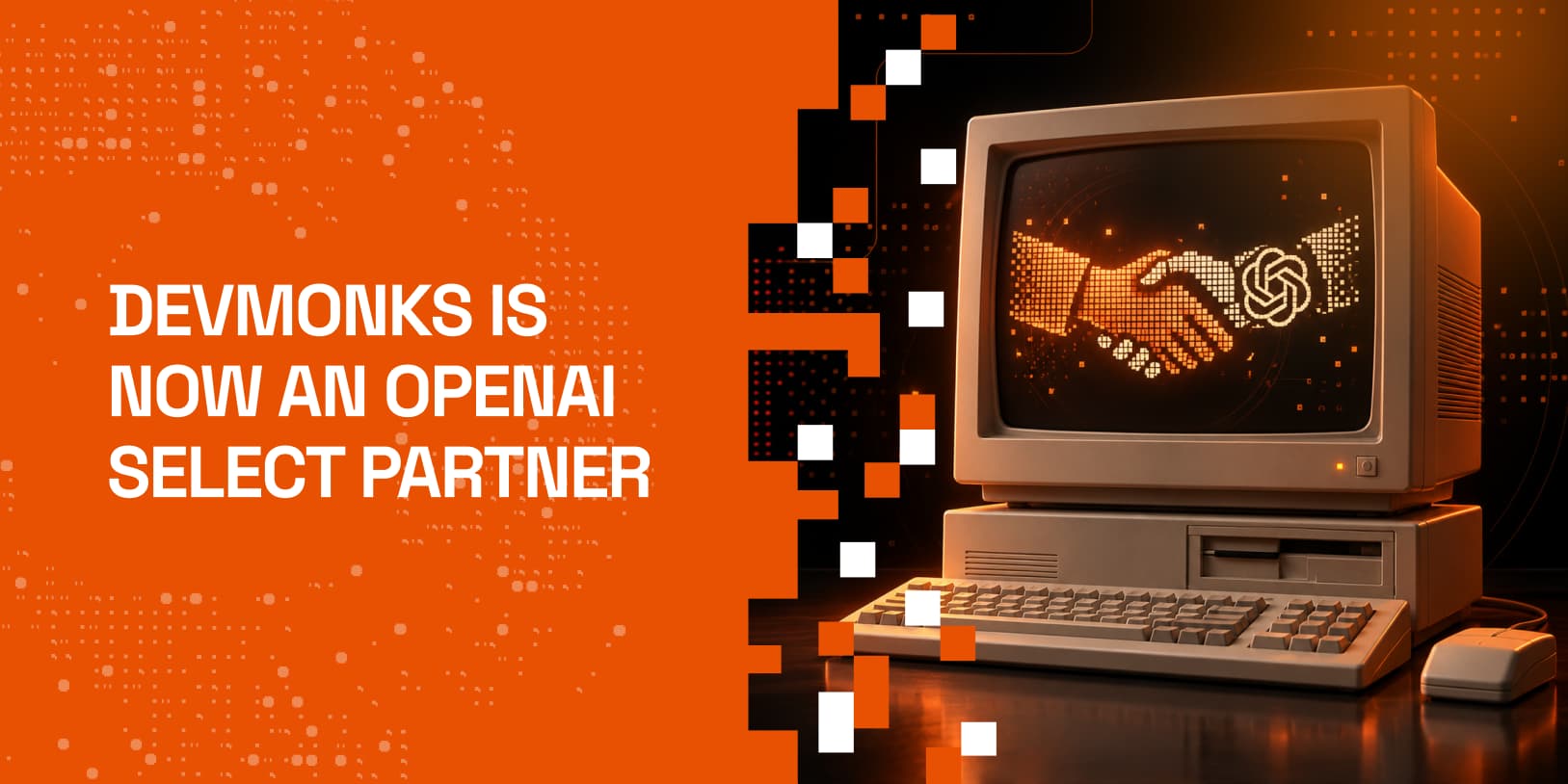
Yes. Dev Monks is now an official OpenAI Select Partner within the OpenAI Partner Network.
How long does it usually take to complete a project?
We combine AI-driven workflows with product-first engineering to provide MVP development services for startups and enterprises. Our approach balances speed, reliability, and usability while keeping teams involved. We deliver production-ready, scalable solutions, not just prototypes or demos.
What makes Dev Monks different from other development companies?
We combine AI-driven workflows with product-first engineering to provide MVP development services for startups and enterprises. Our approach balances speed, reliability, and usability while keeping teams involved. We deliver production-ready, scalable solutions, not just prototypes or demos.
How Involved Will My Team be During Development?
We combine AI-driven workflows with product-first engineering to provide MVP development services for startups and enterprises. Our approach balances speed, reliability, and usability while keeping teams involved. We deliver production-ready, scalable solutions, not just prototypes or demos.
How involved will my team be during development?
We combine AI-driven workflows with product-first engineering to provide MVP development services for startups and enterprises. Our approach balances speed, reliability, and usability while keeping teams involved. We deliver production-ready, scalable solutions, not just prototypes or demos.
Do you develop both web and mobile applications?
We combine AI-driven workflows with product-first engineering to provide MVP development services for startups and enterprises. Our approach balances speed, reliability, and usability while keeping teams involved. We deliver production-ready, scalable solutions, not just prototypes or demos.
How can Dev Monks help my startup launch faster
We combine AI-driven workflows with product-first engineering to provide MVP development services for startups and enterprises. Our approach balances speed, reliability, and usability while keeping teams involved. We deliver production-ready, scalable solutions, not just prototypes or demos.
%20vs%20new%20Date().jpg)