
[ capabilities ]
What Goes Into An AI Product That Works
Calling a model is the easy part. A product people can rely on also needs your data, a clear interface, testing, and control over cost.

LLM app development
A promising AI demo is not a product yet. We build yours into a working web or mobile app, with the accounts, data, and interface real users need.

RAG & knowledge retrieval
A model only knows what it was trained on. We connect it to your documents and data, so answers come from your sources and respect who can see what.

Copilots & in-product assistants
Assistants that live inside your product and draft, summarize, or suggest, while your users stay in control of every step that matters.

Model selection & integration
OpenAI, Anthropic, Gemini, or an open model you host yourself. We compare them on your real tasks and budget, then integrate the one that fits.

Evaluation & guardrails
Before launch, we test answers against examples you agree on, add checks for off-topic or unsafe output, and decide where a person reviews.

Production, cost & monitoring
Model costs and response times start to matter once real users arrive. We set up logging, monitoring, and usage limits so the product stays fast and affordable.




[ process ]
How We Take Your AI Idea To Production
Every stage has a clear question to answer, and you see the AI's real answers along the way, not just a finished demo at the end.

[step 01]
Use case & data review
We pin down one task worth solving, who it is for, and what data it needs, then tell you honestly whether AI is the right tool for it.

[step 01]
Architecture & model choice
Before building, we map the retrieval, model, and app layers, and test candidate models on your examples so the choice rests on results, not hype.

[step 01]
Build & evaluation
We build in short sprints and check the AI's answers against your agreed examples at every step, so quality is measured, not guessed.

[step 01]
Launch & monitoring
We launch, watch answer quality, speed, and cost under real use, and keep improving the product as feedback comes in.
[ stacks ]
The Models And Tools We Build With
We don't tie your product to one model provider. We choose models, vector databases, and frameworks for quality, cost, and where your data is allowed to go.






[ case studies ]
Case studies


AI & ML
[
Talkie
]
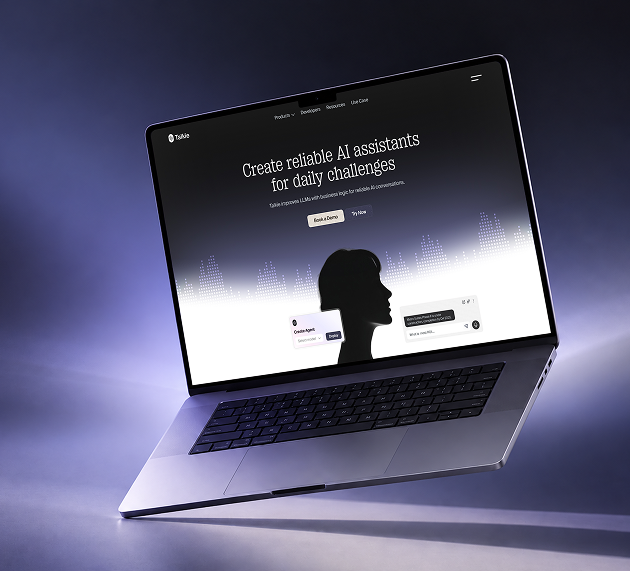
AI assistant marketing site
AI and automation build · 4-week engagement period · Demo-led launch plan
[ The challenge ]
Talkie sold a technical product that buyers struggled to picture, so the team needed a site that showed voice and chat assistants at work and earned trust before any sales call.
Next.js
Typescript
Tailwind CSS
Node.js
PostGreSQL
[ What we built ]
Interactive voice and chat demos sit beside integration maps and live impact figures, all linked to a short form for free trials and demo bookings.
2.6×
Demo bookings
38%
Trial sign-up lift
1.4s
Page load time
SaaS website · Brand, UI/UX & development
[ projects ]
AI Products We've Built


DEEPVISION
WebApp
AI Creative
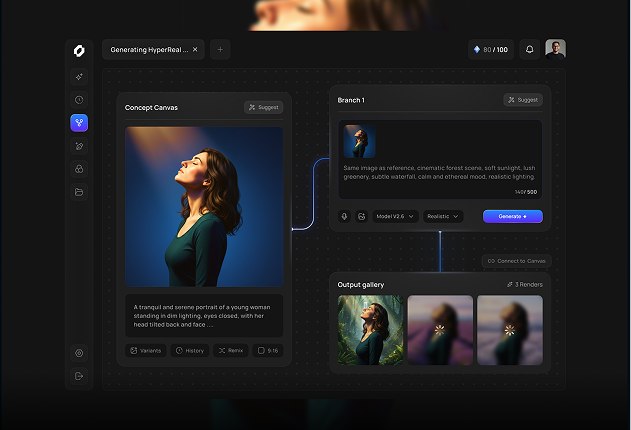
A node canvas that branches ideas into renders
We built the AI engine behind DeepVision, from prompt branching to model selection and style controls. Renders land in the gallery fast, and remix and history tools make every experiment easy to trace back.

NEXORA
Website
AI Productivity
Writing, images, and automation in one AI suite
Building four AI tools under one roof is hard. We connected the models, custom personas, file uploads, and saved prompts so Nexora runs smoothly from the very first free trial.

INKORA
Website
AI Writing
AI writing tools tuned for blogs and SEO
Inkora needed content that comes out fast and reads well in many languages. In this case, we wired the AI models into chat-style tools for blogs, SEO, and articles, and tracked usage so growth stays visible.

ASSIST ME
Mobile App
Productivity
One mobile app for email, files, tasks
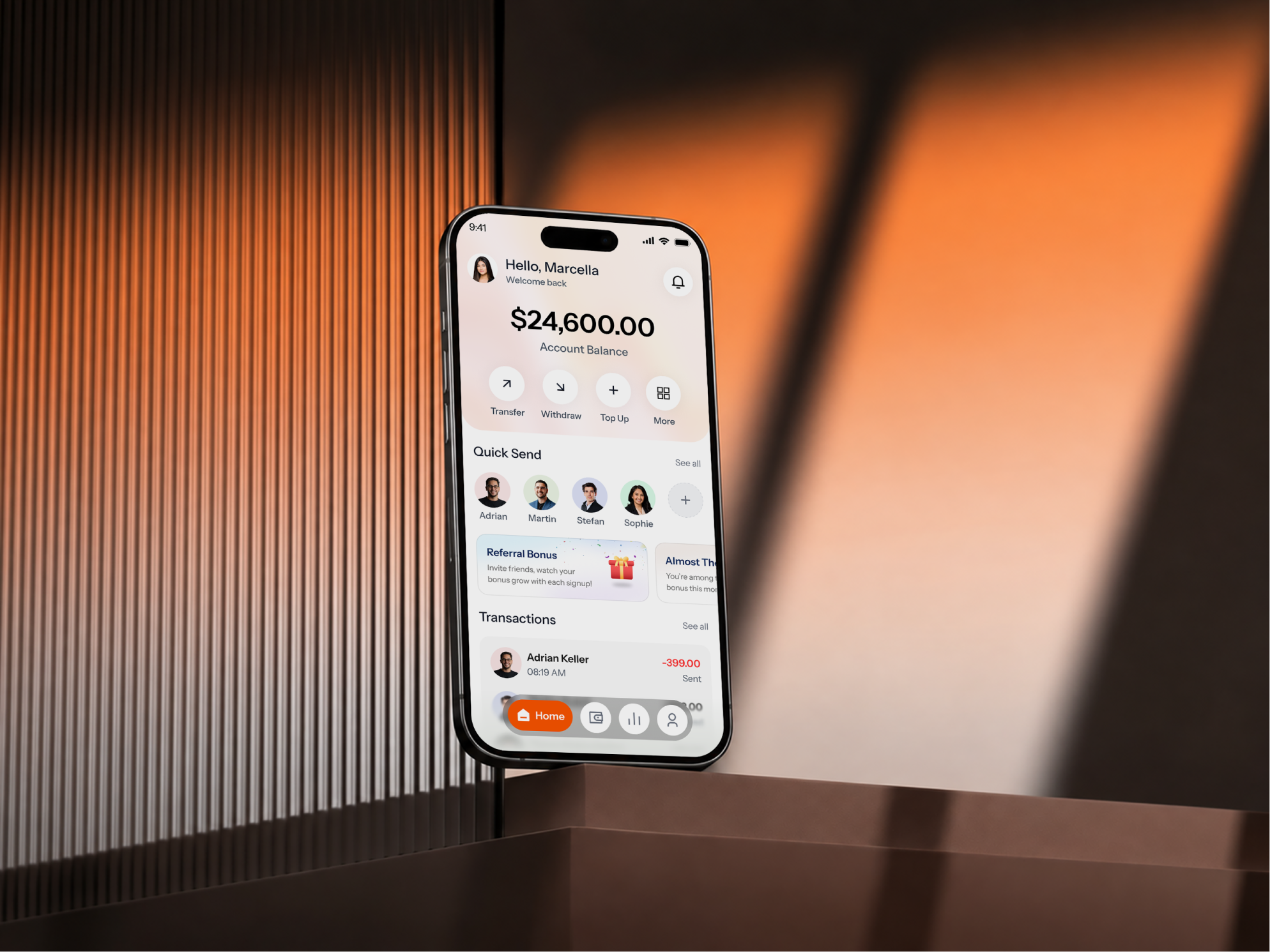
We built the Assistant app for mobile, from the welcome screen to the home dashboard. It holds the AI copilot, a document scanner, and quick actions that bring email, files, and tasks together.
[ transformation ]
The Rebuild, Not The Pitch
Projects often begin with damage control: the audit, the fix, and the aftermath.
A dedicated 4-person pod
Designer, engineers and QA, all on your product.
One team, two platforms
iOS + Android, one team, one codebase.
Crash-free at scale
99.2% stability across 1.8M live users.
What clients actually say
Feedback from founders we've shipped with.
Direct speak with the engineer
Saiful replies directly, no manager in the loop.
Built in Dhaka, shipped globally
Live in 9+ countries across four continents.
[ testimonial ]
What It's Like Building With Us

Sofia Gouveia @ Esdiac
Design Director
We relied on them to build our online store with AI-enhanced features that improve customer experience.
Working with Dev Monks on our ESDIAC app and group websites was an excellent experience. They were patient, attentive to feedback, and delivered clean, consistent, high-quality work. We're proud of the results and happy to continue our long-term partnership with them.


Anika @ Coin Pulse
Founder
Their team truly understood our vision and brought it to life through a stunning digital identity.
Dev Monks is a professional, reliable partner for end-to-end product builds. From clean, modern designs to seamless development, they exceeded my expectations. I couldn't be happier with the collaboration!

Austin @ Clarity LLC
CEO
Working with Dev Monks completely changed how we approached building our app website scratch.
I've worked with Design Monks on three websites, and they've been nothing but exceptional. Their design is top-notch, development is reliable, and communication is always smooth. They quickly act on feedback and deliver exactly what I need. For me, they're a 10/10 partner for all things design and development.

Ted Nash @ Yenex
Founder & CEO
I never expected building a complex platform to feel this easy and smooth.
I've had the pleasure of collaborating with Dev Monks for a while now on my new project. They're lightning-quick in addressing any questions or feedback I have, and they consistently go the extra mile to make sure I'm thrilled with the final outcome. I wholeheartedly endorse them


[ faq ]
Questions You'd Ask Before Signing Off

How is this different from your AI & Automation service?

AI & Automation is for your internal work: workflows, integrations, and tools that save your team time. AI Product Development is for when AI is part of the product you sell, such as an LLM app, a knowledge assistant, or a copilot your customers use. Still proving the idea? Start with a lean proof of concept through AI MVP Development. If you're not sure which fits, we'll tell you on the first call.
What is RAG, and does my product need it?
RAG, or retrieval-augmented generation, finds the relevant parts of your documents or data and gives them to the model before it answers. You likely need it if answers must come from your own content or change often. If the task doesn't depend on your data, a simpler setup may be enough.
Which AI models do you work with?
We work with hosted models from providers such as OpenAI, Anthropic, and Google Gemini, and with open models you can run yourself. We don't start with a favorite. We test the options on your real tasks and pick based on quality, speed, cost, and where your data is allowed to go.
How do you stop the AI from giving wrong answers?
No AI product is right every time, so we design for that. We ground answers in your sources, test against examples you agree on, add guardrails for off-topic or unsafe output, and put a human review step wherever a mistake would be costly.
What will the AI cost to run after launch?
Running costs depend on how many people use it, how much text each request handles, and which model you choose. We estimate this with you during planning, then set up usage tracking and limits so there are no surprises on your bill. If you already run an AI app that costs too much, see AI Cost Optimization.


[ start project ]
Bring Us Your AI Product Idea
Share the task you want AI to handle and the data behind it. We'll tell you honestly whether it's ready to build and what a first version needs.
Typical range
$15,000 – $80,000
~/devmonks/stack.ts

Dual-store launch included

Fixed, transparent scope
Your ideas deserve more than prototypes. Partner with Dev Monks and bring scalable, reliable, and AI-enhanced products to life today.


