Backend vs Frontend Development: 11 Key Differences!
.png)

.svg)
[ key takeways ]
- Frontend development focuses on user interface, design, and user interaction experience.
- Backend development handles server logic, databases, APIs, and application functionality behind the scenes.
- Frontend runs on the client-side, while backend processes data on server-side systems.
- Both frontend and backend work together to build complete web applications.
- Full-stack developers manage both frontend and backend to deliver end-to-end solutions.
.svg)
Frontend vs backend development is one of the most common comparisons in web development, yet many people still confuse the roles of each.
Frontend Development focuses on the parts of a website or application that users see and interact with, while Backend Development powers everything behind the scenes through server-side development, databases, and application logic.
Both are essential for creating modern web applications, and neither can function effectively without the other. Understanding the difference is important whether you are planning a career in tech, hiring developers, or building a digital product.
It helps you choose the right skills, technologies, and development approach for your goals.
In this article, we will break down the key differences between frontend and backend development, how they work together, and which path may be right for you.
Frontend vs Backend Development Comparison Table
To make the differences easier to understand, the table below summarizes frontend and backend development side by side.
Building a successful application requires both a strong frontend and a reliable backend working together seamlessly.
At Dev Monks, our development team specializes in both areas, which creates digital products that deliver exceptional user experiences while maintaining powerful performance behind the scenes.
Frontend vs Backend Development: Key Differences
Frontend and backend development are two sides of the same coin, but they focus on very different parts of a digital product.
Frontend deals with what users see and interact with, while backend works behind the scenes to make everything function properly.
Main Focus
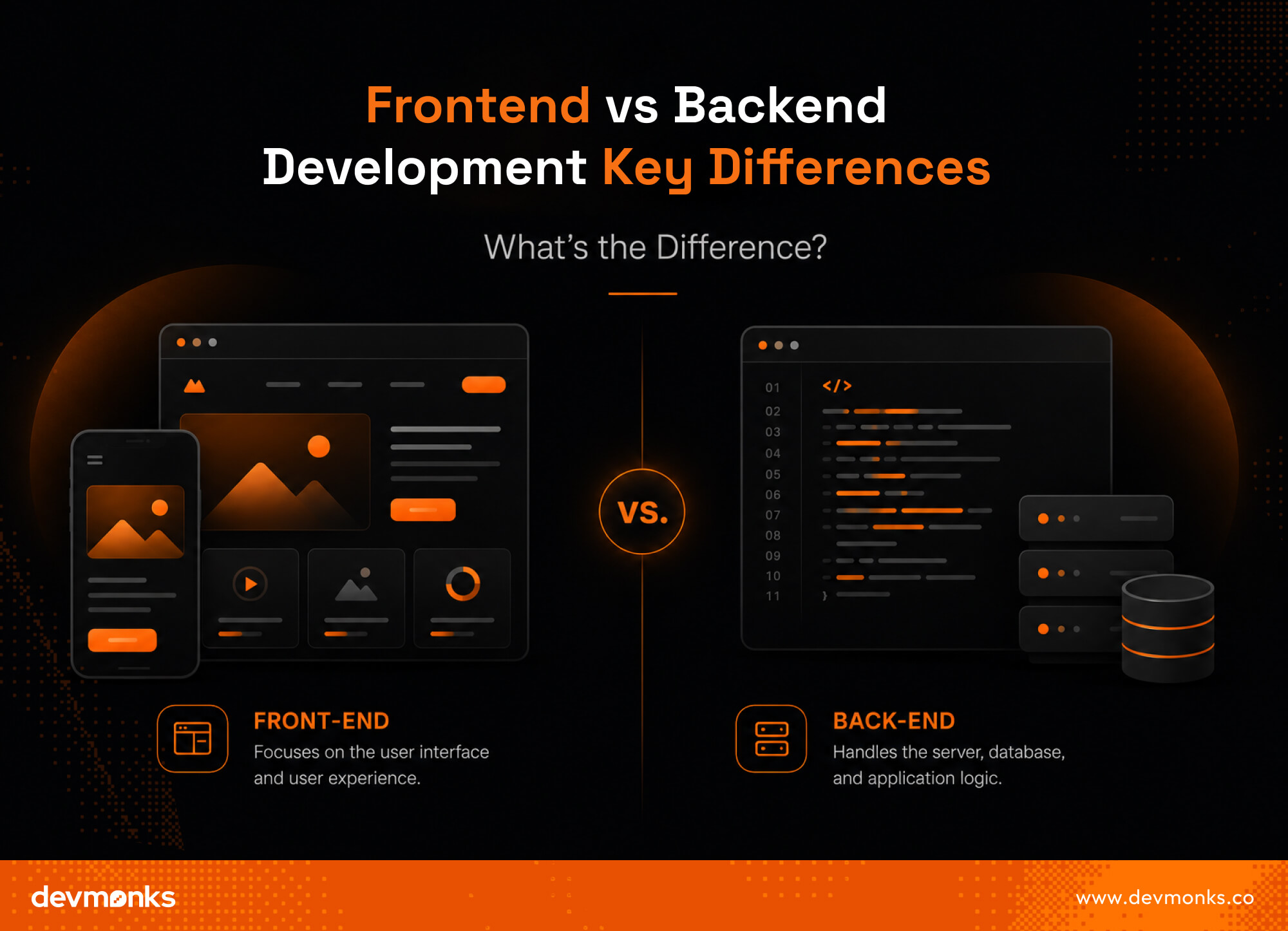
Frontend development focuses on the visual and interactive part of a website or application, whereas backend development focuses on the server-side logic, data handling, and system performance.
Frontend is what users directly see on their screens, such as buttons, layouts, colors, images, forms, and navigation. It is all about user experience and making the product easy and enjoyable to use.
Developers use technologies like HTML, CSS, and JavaScript to build this layer.
On the other hand, backend development powers the application behind the scenes. It handles databases, user authentication, server requests, and application logic using languages like Python, Java, or Node.js.
User Interface vs Business Logic
The frontend user interface is what users interact with directly, on the other hand, the backend does not have a visible interface for users because it works in the background.
The frontend UI includes everything a user clicks, types, and views, making it responsible for design, responsiveness, and user experience. It ensures the application looks good and feels smooth.
In contrast, backend development focuses on business logic, which means how data is processed, stored, and managed.
It decides what happens after a user submits a form or clicks a button. The backend ensures that the right data is delivered to the frontend securely and efficiently.
Development Architecture
Frontend development works with client-side architecture, whereas backend development works with server-side architecture that powers the application logic and data flow.
On the frontend, applications are structured as component-based systems using frameworks like React, Vue.js, and Angular.
Many frontend applications are also built with frameworks like Next.js, which helps improve performance, routing, and server-side rendering.
These components run in the browser and are responsible for rendering the user interface and handling user interactions. Everything is delivered to users through the client-side.
On the backend, the architecture is built around servers, APIs, and databases. Technologies like REST API, GraphQL, and PostgreSQL manage how data is stored, retrieved, and shared.
Backend systems handle business logic, authentication, hosting, scalability, and performance to ensure smooth application functioning.
Client-Side vs Server-Side Processing
Frontend processing happens on the client-side inside the user’s browser, on the contrary, backend processing happens on the server-side, where data is processed before being sent to the user.
In client-side processing, the browser handles tasks like rendering pages, updating UI elements, and managing user interactions in real time.
This makes applications faster and more interactive for users. Technologies like JavaScript frameworks are mainly used here.
In server-side processing, the backend handles requests, processes data, communicates with databases, and sends responses back to the frontend.
It ensures security, data accuracy, and proper business logic execution before anything reaches the user interface.
Technologies Used
Frontend development focuses on client-side tools and frameworks, whereas backend development focuses on server-side frameworks, databases, and infrastructure tools.
On the frontend, developers commonly use frameworks like React, Vue.js, Angular, and Svelte along with TypeScript to build interactive, scalable, and responsive user interfaces. These tools help create smooth user experiences in the browser.
On the backend, developers use frameworks such as Express.js, Django, Spring Boot, Laravel, and ASP.NET to build secure and scalable applications.
Backend systems also rely heavily on databases like PostgreSQL, MySQL, MongoDB, and Redis to store and manage data efficiently. Together, these frontend and backend frameworks form complete web development systems.
Performance Responsibilities
Frontend performance responsibilities emphasize ensuring the application loads quickly and provides a smooth user experience, whereas backend performance responsibilities deal with handling data processing, server efficiency, and system reliability.
The frontend is responsible for optimizing images, reducing load times, managing rendering speed, and ensuring a responsive design across devices. It directly affects how fast and smooth the app feels to users.
The backend ensures performance by optimizing database queries, managing server load, handling multiple requests, and maintaining API efficiency.
It also focuses on scalability so the system can handle more users without slowing down or crashing under heavy traffic.
Security Responsibilities
Frontend security focuses on protecting the user interface and preventing client-side vulnerabilities, whereas backend security focuses on protecting data, APIs, and server-side systems from threats.
On the frontend, security work includes handling safe input forms, preventing cross-site scripting (XSS), and ensuring that sensitive data is not exposed in the browser. However, most frontend security is limited because code is visible to users.
On the backend, security responsibilities are much deeper and more critical. It includes securing APIs, protecting databases, managing encryption, controlling access, and validating every request.
Backend systems also handle authentication and authorization to ensure only the right users can access specific data and functions.
Development Challenges
Frontend development challenges are based on creating smooth user experiences across different devices and browsers, whereas backend development challenges focus on managing system complexity, data handling, and server reliability.
On the frontend side, developers often face issues like browser compatibility, responsive design, performance optimization, and maintaining a consistent UI across platforms.
Conversely, on the backend side, challenges include designing scalable APIs, managing databases, handling high traffic loads, and ensuring fast and secure data processing.
Backend developers must also deal with system integration and error handling between multiple services.
Overall, frontend challenges are more user-facing, while backend challenges are more focused on system stability, data flow, and application architecture.
Developer Skills
Frontend developer skills focus on building user interfaces and creating smooth user experiences, whereas backend developer skills focus on managing servers, databases, and application logic.
Frontend developers need technical skills in HTML, CSS, JavaScript, and frameworks like React or Vue.js to build responsive and interactive designs.
Backend developers require knowledge of programming languages like Python, Java, or Node.js, along with databases and APIs. Both roles need strong problem-solving skills to debug issues and improve performance.
Communication and collaboration skills are also important because frontend and backend developers must work closely together to build fully functional applications that meet user and business needs.
For most beginners, frontend development is easier and is usually the best place to start before learning backend development.
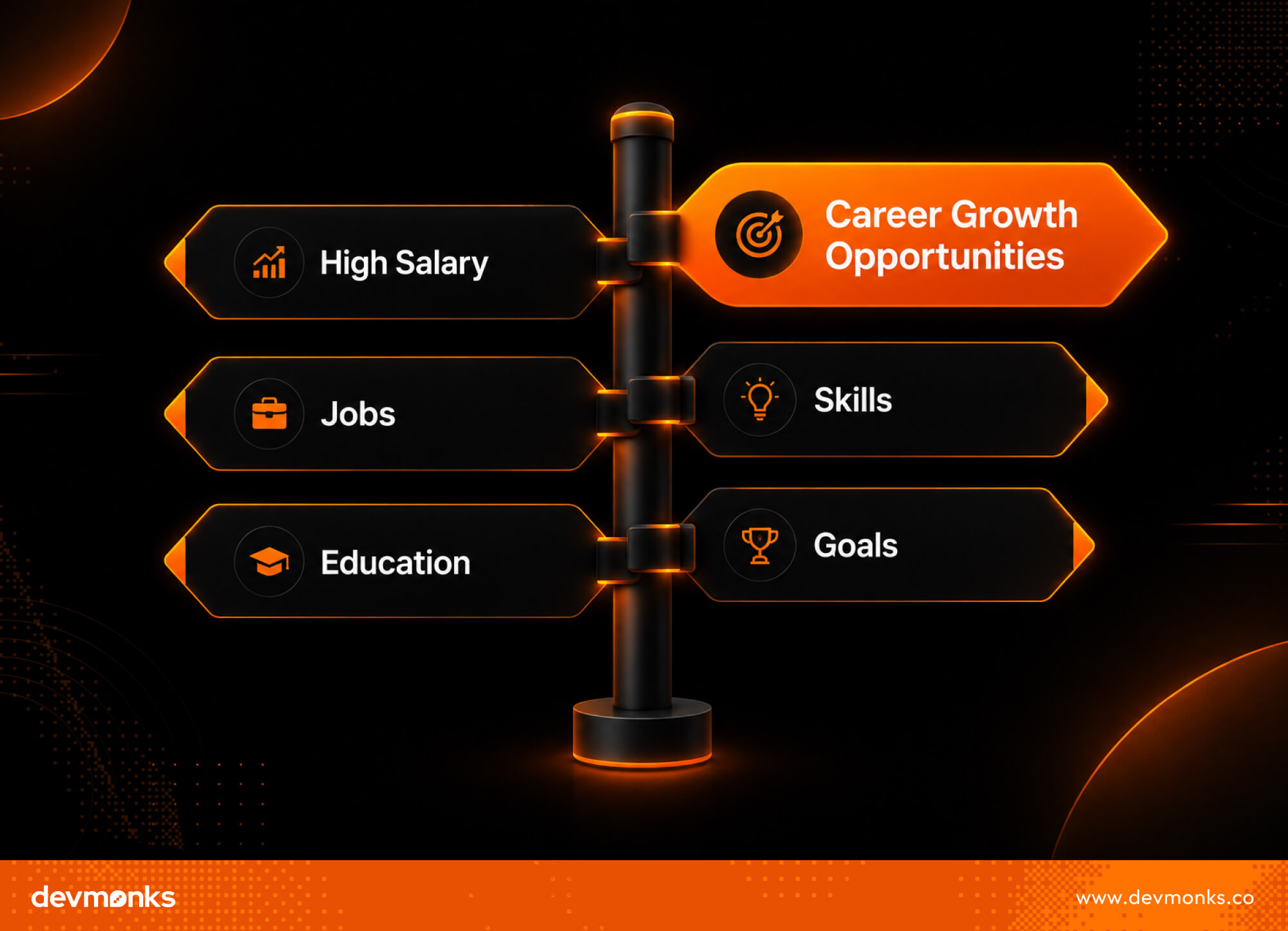
Salary and Career Opportunities
Frontend and backend development offer strong career opportunities in software engineering, but their paths and demand can differ slightly.
Frontend developer careers focus on building user interfaces, while backend developer careers focus on building server-side systems and data management.
In the industry, both roles are highly in demand, especially as companies expand their digital products.
Backend roles often require deeper system knowledge, which can sometimes lead to slightly higher salaries, while frontend roles are highly valued for user experience design.
So, in general, backend developers tend to earn slightly more on average, though salaries vary based on experience, location, industry, and technical expertise.
Remote work opportunities are available in both fields, and many professionals eventually grow into full-stack developer or software engineer roles with broader responsibilities.
Learning Difficulty
Frontend development is often seen as easier to start with, on the other hand, backend development is considered more complex due to its focus on logic, servers, and databases.
Learning frontend development involves understanding HTML, CSS, and JavaScript first, then gradually moving to frameworks like React or Vue.js. It feels more visual, so beginners can quickly see results on the screen.
Learning backend development requires understanding programming languages, APIs, database systems, and server architecture. Beginners often struggle with debugging, data flow, and system logic.
A good learning path is to start with frontend basics, then move to backend concepts, and finally combine both into full-stack development projects.
How Frontend and Backend Developers Work Together
Frontend and backend developers work closely as a team to build complete and functional software. Their collaboration ensures that users get a smooth experience while the system runs efficiently in the background.
Both sides depend on each other, and communication is a key part of the software development lifecycle.
API Communication
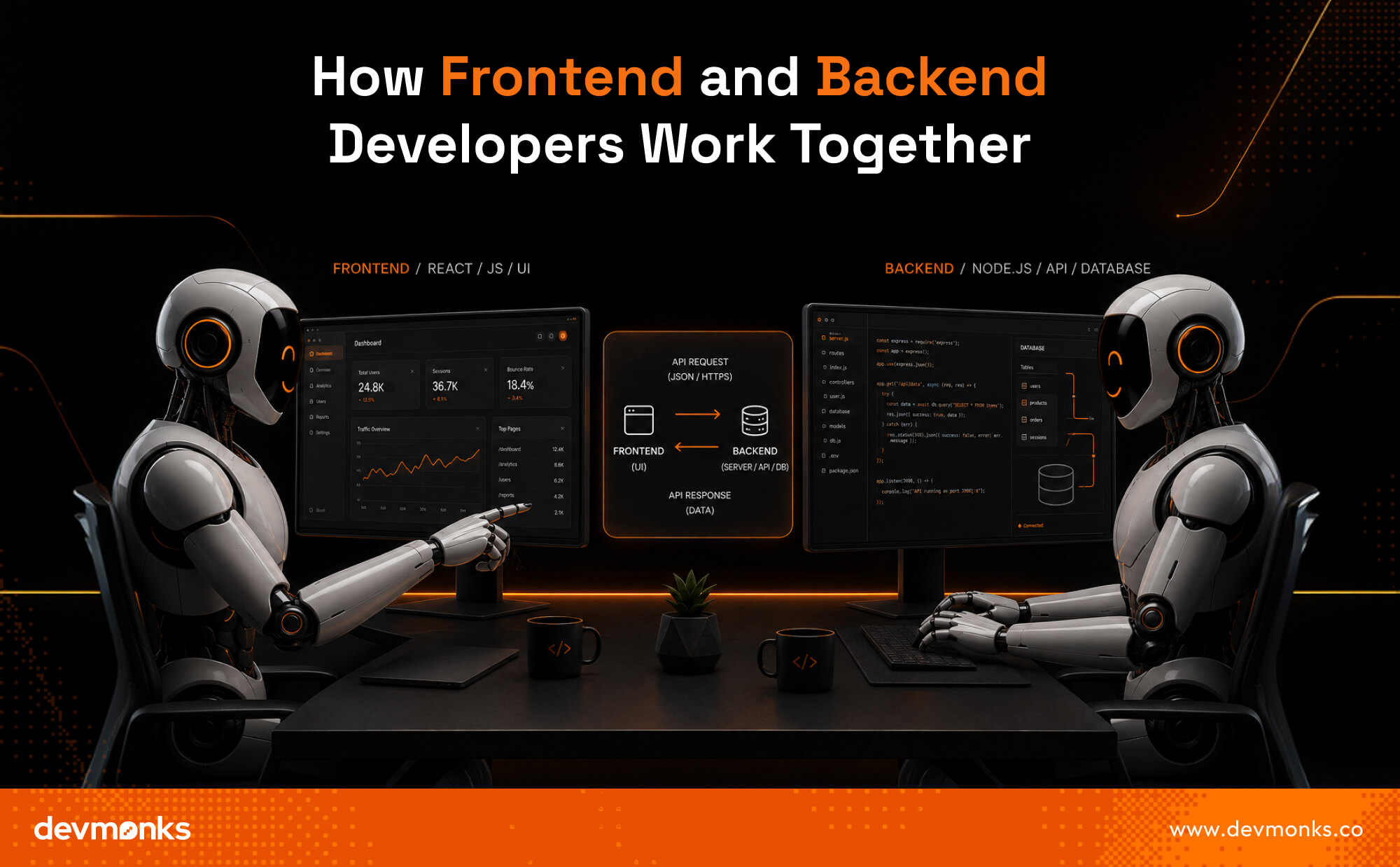
API communication is the main bridge between frontend and backend systems. The frontend sends requests, and the backend responds with data using APIs, often in JSON format.
This allows both sides to stay separate but still work together smoothly in real time. This API-driven approach is also what makes headless web development possible.
Design-to-Development Handoff
In this stage, UI/UX designs are shared with frontend developers. They convert design files into interactive interfaces while ensuring backend requirements are considered for functionality and data integration.
Data Flow Between Frontend and Backend
Data flows from the frontend to the backend through user actions like form submissions. The backend processes it, interacts with the database, and sends the required response back to the frontend.
Agile Team Collaboration
In agile teams, frontend and backend developers work in short development cycles. They attend regular meetings, review progress, and quickly fix issues together to improve product quality.
This kind of close collaboration is a key part of custom software development, where frontend and backend teams work together to build tailored digital solutions for specific business needs.
Teams also use GitHub to manage code, review changes, and collaborate efficiently throughout the development process.
For larger custom software projects, reliable DevOps consultants also play an important role in streamlining development, testing, and deployment.
What Is Full-Stack Development?
Full-stack development means working on both the frontend and backend parts of a web application. A full-stack developer handles everything from designing user interfaces to managing servers, APIs, and databases.
This makes them flexible professionals who can build complete applications on their own or support both sides of a development team.
Full-stack development is important in modern software engineering because it helps companies build products faster and manage systems more efficiently.
Full-Stack Developer Responsibilities
A full-stack developer is responsible for building the user interface, writing backend logic, managing databases, and connecting everything using APIs. They ensure that both frontend and backend work smoothly together.
Popular Full-Stack Technology Stacks
Some popular stacks include the MERN Stack and MEAN Stack, which combine frontend frameworks with backend technologies and databases to create complete applications.
When Businesses Need Full-Stack Developers
Businesses hire full-stack developers when they need faster development, smaller teams, or flexible engineers who can handle both frontend and backend tasks in software projects.
For businesses looking for complete development support, working with a team that understands both frontend and backend development can simplify the entire process.
At Dev Monks, our developers combine full-stack expertise with modern technologies to build scalable, high-performing web and mobile applications from end to end.
FAQs
Will AI Replace Frontend Developers?
No, AI is unlikely to replace frontend developers completely. While AI can automate repetitive coding tasks and generate UI components, developers are still needed to create user experiences, solve complex problems, and ensure applications meet business and user requirements.
Can I Learn Backend Development in 6 Months?
Yes, you can learn backend development in 6 months with consistent practice. Focus on a programming language, databases, APIs, and server concepts. While mastering backend development takes longer, six months is enough to build basic projects and gain practical skills.
Is C++ a Frontend or Backend Language?
C++ is primarily used for backend development rather than frontend development. It is commonly used for system programming, game engines, high-performance applications, and server-side software. Frontend development typically relies on technologies such as HTML, CSS, and JavaScript.
End Note
Frontend and backend development serve different but equally important roles in modern software development. Frontend creates the experiences users see and interact with, while backend powers the functionality behind the scenes.
There is no clear winner between the two. The right choice depends on your interests, skills, and career goals. Together, they form the foundation of every successful digital product.
.png)
.svg)
Frequently Asked Questions
How can I discuss an AI MVP with Dev Monks?

Book a strategy call with your use case, existing systems, and project priorities. The team can help define an initial scope and the dependencies that need to be addressed.
Does using AI replace engineering review?
Dev Monks uses AI-assisted workflows with human-guided decisions. Product requirements, engineering choices, and testing remain part of the development process.
What AI development services does Dev Monks offer?
Dev Monks offers agentic AI solutions, custom language-model solutions, workflow automation, and RAG development. Its broader services include SaaS engineering, MVP development, backend integrations, and web and mobile applications.
Is Dev Monks an official OpenAI Select Partner?
Yes. Dev Monks is now an official OpenAI Select Partner within the OpenAI Partner Network.
How long does it usually take to complete a project?
We combine AI-driven workflows with product-first engineering to provide MVP development services for startups and enterprises. Our approach balances speed, reliability, and usability while keeping teams involved. We deliver production-ready, scalable solutions, not just prototypes or demos.
What makes Dev Monks different from other development companies?
We combine AI-driven workflows with product-first engineering to provide MVP development services for startups and enterprises. Our approach balances speed, reliability, and usability while keeping teams involved. We deliver production-ready, scalable solutions, not just prototypes or demos.
How Involved Will My Team be During Development?
We combine AI-driven workflows with product-first engineering to provide MVP development services for startups and enterprises. Our approach balances speed, reliability, and usability while keeping teams involved. We deliver production-ready, scalable solutions, not just prototypes or demos.
How involved will my team be during development?
We combine AI-driven workflows with product-first engineering to provide MVP development services for startups and enterprises. Our approach balances speed, reliability, and usability while keeping teams involved. We deliver production-ready, scalable solutions, not just prototypes or demos.
Do you develop both web and mobile applications?
We combine AI-driven workflows with product-first engineering to provide MVP development services for startups and enterprises. Our approach balances speed, reliability, and usability while keeping teams involved. We deliver production-ready, scalable solutions, not just prototypes or demos.
How can Dev Monks help my startup launch faster
We combine AI-driven workflows with product-first engineering to provide MVP development services for startups and enterprises. Our approach balances speed, reliability, and usability while keeping teams involved. We deliver production-ready, scalable solutions, not just prototypes or demos.
%20vs%20new%20Date().jpg)